
It’s frustrating to spend your precious vacation days wandering through maze-like corridors without really understanding the logic of the building — or worse, missing its greatest treasures simply because no one told you where to look.
In the end, you leave the museum with the feeling that you’ve “checked the box,” but without truly experiencing the soul of the place.
The good news is that there’s a way to completely transform this experience.
In this article, we reveal practical tips and hidden stories from Spain’s most important museums — along with a few lesser-known gems — so you can move from being a passive observer to a mindful visitor.
Get ready to discover how to enjoy art at a slower pace, without filters, and with a perspective that will change your next trip.
Real Alcázar of Seville
The Real Alcázar of Seville consistently ranks among the top international lists because it functions as a living museum.
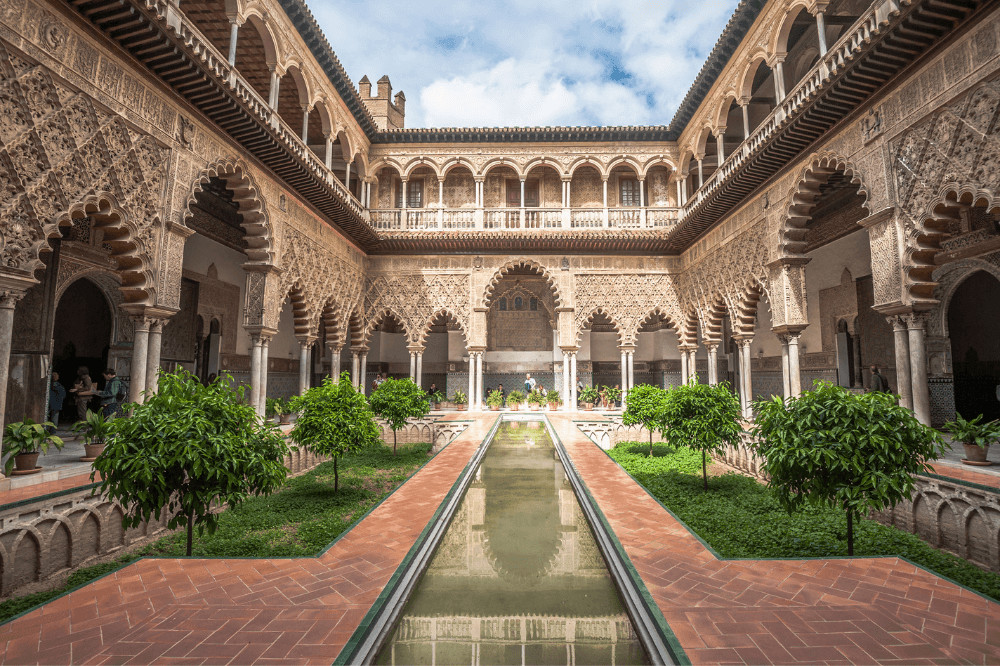
This palace complex, considered one of the oldest still in use in the world, does not rely on objects displayed behind glass to convey its value, but on the history that lives and breathes through its architecture, its courtyards, and its gardens.
Those who walk through its halls don’t simply observe art — they are transported to another era through an environment that has preserved its essence over the centuries.
Authentic Andalusian Menu: Iberian Ham & Churros in Seville’s Historic Center.
Montjuïc Park
Barcelona offers a surprising approach by including Montjuïc Park among its cultural highlights, as this vast green space functions as a first-rate cultural hub.
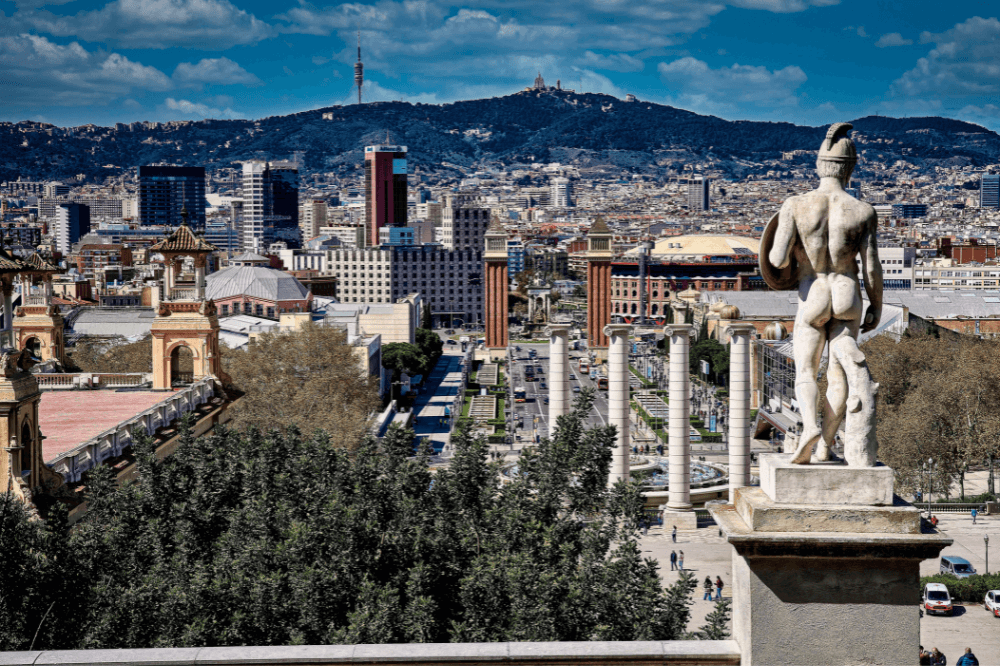
The park is home to key institutions such as the Museu Nacional d’Art de Catalunya and the Barcelona Museum of Archaeology, allowing visitors to combine an outdoor stroll with artistic discovery.
This integration shows how a natural setting can enhance the experience of an art museum, offering a much more complete and enriching visit.
Mediterranean flavors and Spanish guitar experience near Barcelona’s Cathedral of the Sea.
Museo Nacional del Prado
The Prado Museum, a cornerstone of Madrid’s Triangle of Art, presents a unique challenge due to its origins as a scientific cabinet.
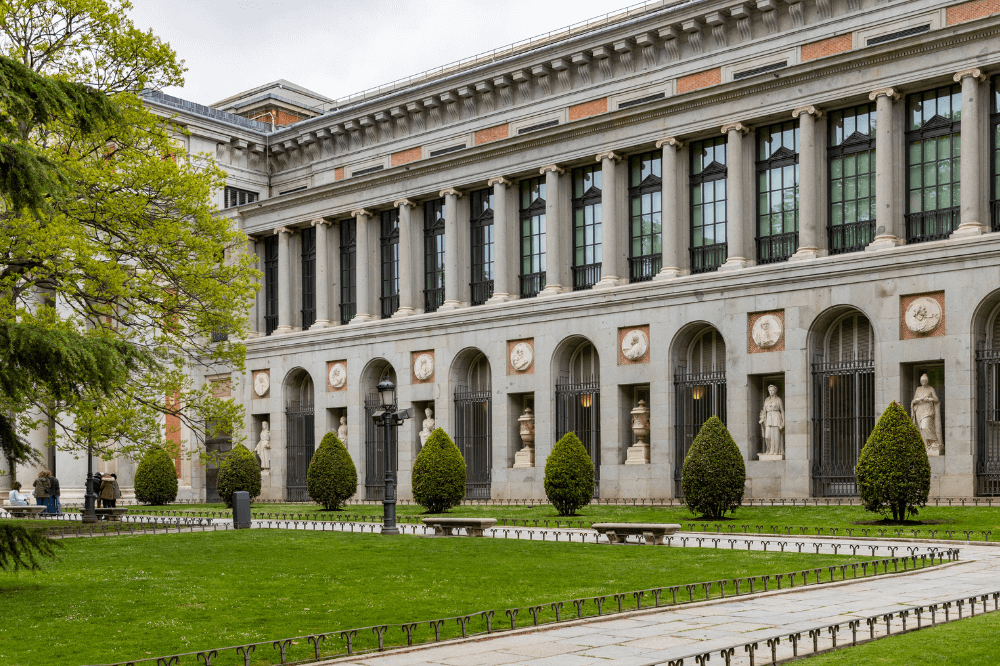
Because it was not originally designed to display paintings, its galleries are connected according to a layout that isn’t always intuitive for visitors, which can lead to a sense of confusion if you arrive without a clear plan.
To truly conquer this space, experts recommend entering first thing in the morning after purchasing your ticket in advance — allowing you the almost surreal privilege of contemplating Las Meninas in complete silence before the crowds arrive.
Museo Reina Sofía
The Reina Sofía Museum occupies the former headquarters of Madrid’s General Hospital — a fact that deeply shapes the visitor’s experience.
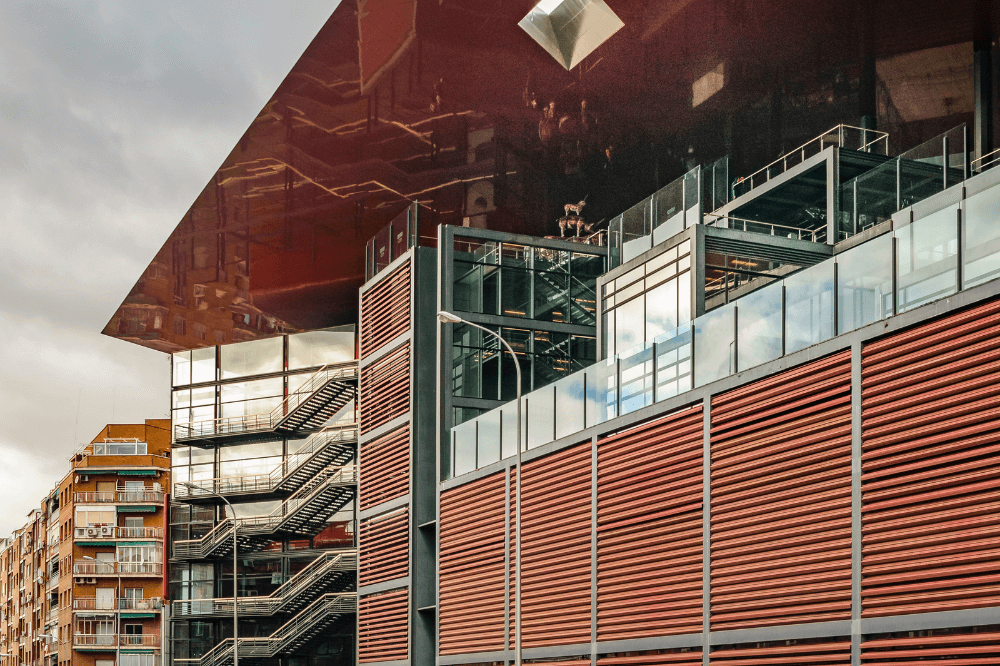
This hospital-style structure creates a complex, somewhat labyrinthine route, full of corners and passages that sometimes lead to dead ends.
However, the effort is rewarded upon reaching the heart of the museum, home to Picasso’s Guernica — a monumental mural that has come to symbolize the fight against the brutality of war.
Because of its popularity, booking tickets in advance is essential, especially on rainy days, when visitor numbers rise sharply.
Museo Thyssen-Bornemisza
The Thyssen-Bornemisza Museum stands apart from its Madrid neighbors because its building was conceived from the outset with the explicit purpose of being a museum.
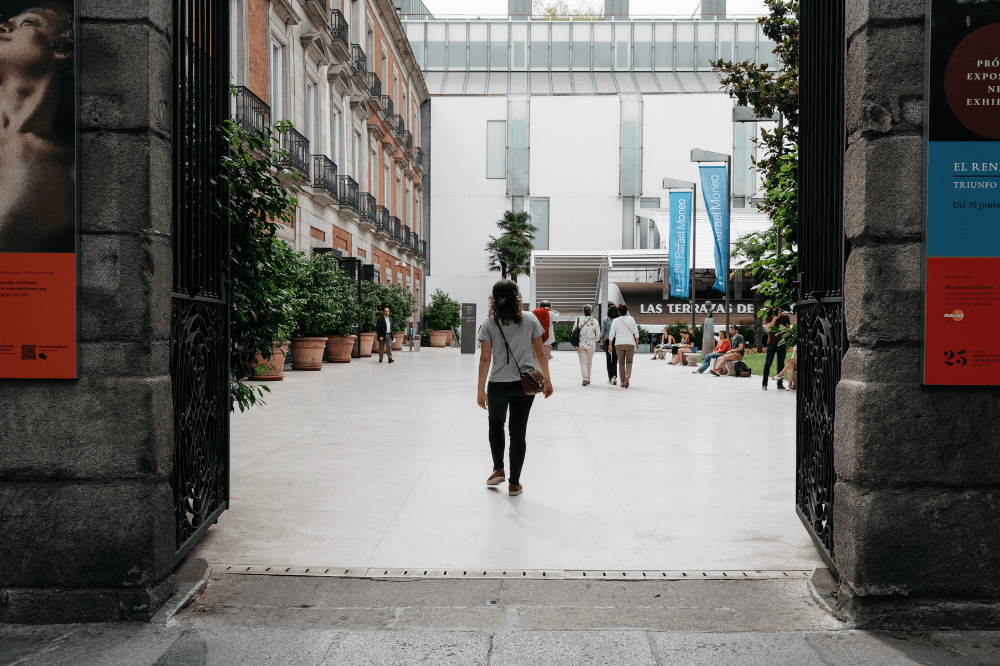
This original planning allows for a clear, chronological route that gently guides visitors through the history of art.
Its arrival in 1992 was a strategic move for the capital, as the Thyssen collection fills in the stylistic and historical gaps left by the Prado and the Reina Sofía, completing an unparalleled lesson in art history within just one kilometer.
City of Arts and Sciences
Valencia redefines the cultural visit with the City of Arts and Sciences, a futuristic complex that goes far beyond the traditional concept of a museum.
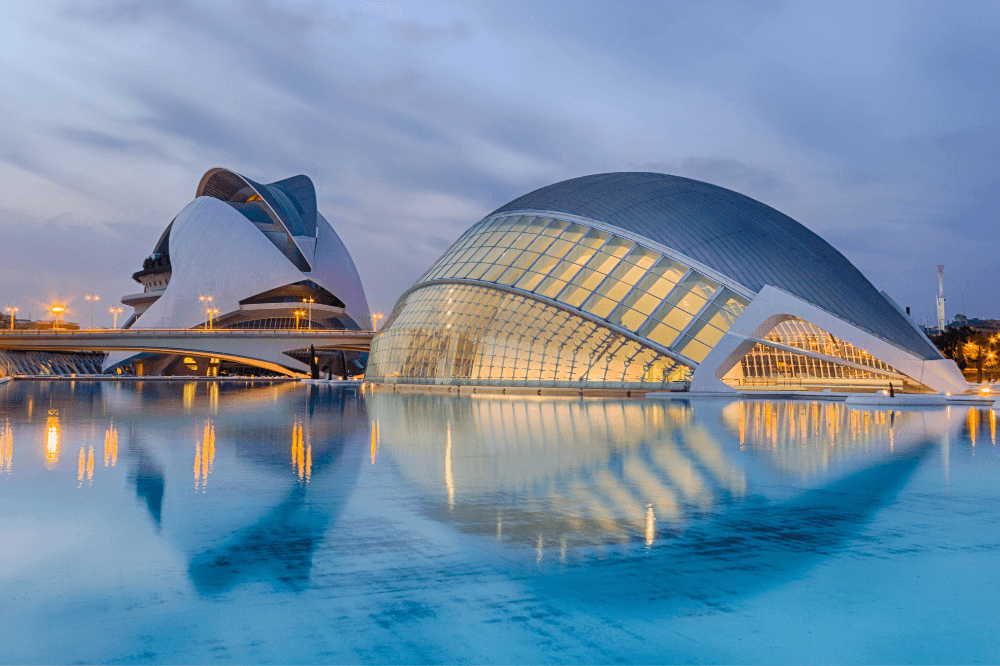
The Prince Felipe Science Museum invites hands-on participation under the motto “it’s forbidden not to touch,” while L’Oceanogràfic immerses visitors in the largest aquarium in Europe, home to more than 40,000 animals.
Together with the Hemisfèric, this architectural ensemble blends science and entertainment, proving that culture can also be an immersive adventure for all the senses.
The Legacy of Picasso in Málaga and Barcelona
Pablo Picasso’s work unfolds across Spain like a puzzle that traces his own biography.
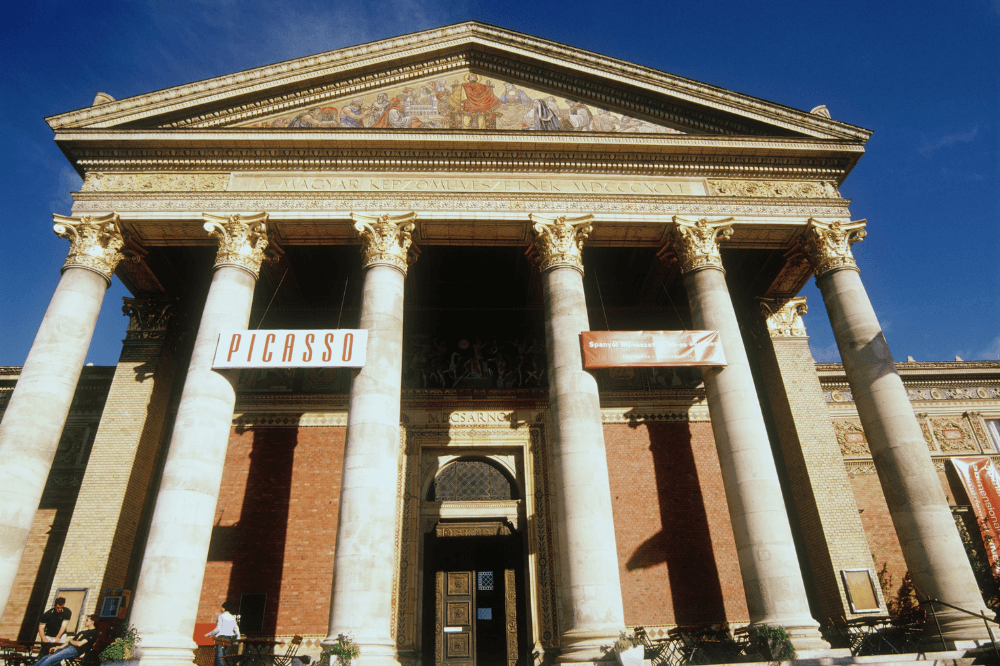
In Málaga, his birthplace, the Museo Picasso Málaga reflects the artist’s explicit wish to have a presence in his city of origin, housing works donated by his family.
Meanwhile, the Museu Picasso de Barcelona preserves the most complete collection from his formative and early years, enriched by historic donations such as that of Jaime Sabartés.
Together, these two institutions — along with the Museo Reina Sofía in Madrid — allow travelers to trace a journey from the genius’s early training to his consecration as a global political icon.
Lesser-Known but Fascinating Museums
If you’re looking to step away from the most crowded routes, Spain hides a network of thematic museums and local gems that offer a different perspective on our culture.
Museo Cerralbo (Madrid)
Located in the heart of Madrid, this palace was once the residence of the Marquis of Cerralbo and preserves intact the atmosphere of a 19th-century aristocratic mansion.
As you step inside, you walk through rooms filled with works of art, antique weapons, and tapestries, exactly as they were left by their original owner.
It’s the perfect place for those who want to experience the luxury of the era without the crowds of the major art museums.
National Museum of Sculpture (Valladolid)
This museum is one of the most impressive gems of Castile and León, spread across three historic buildings of remarkable architectural beauty, such as the College of San Gregorio.
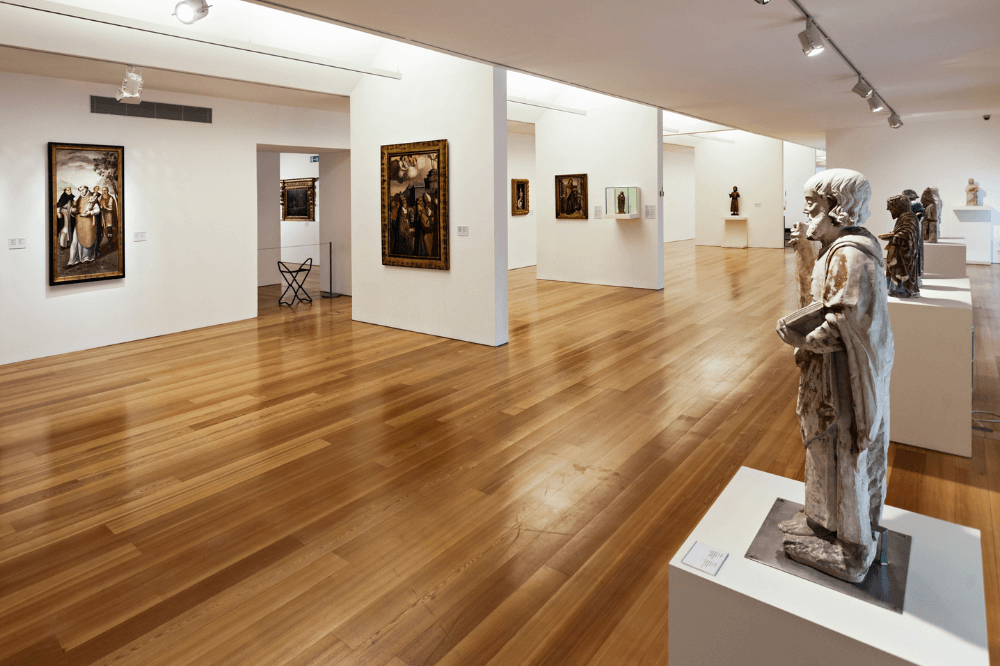
It houses Spain’s most important collection of polychrome wooden sculpture, featuring masterpieces by artists such as Alonso Berruguete and Juan de Juni.
The dramatic intensity of its works, combined with the beauty of its monumental setting, makes it a must-visit for lovers of religious and Renaissance art.
Museo Vostell Malpartida (Cáceres)
Located in the natural setting of Los Barruecos Natural Monument, this museum merges avant-garde contemporary art with a landscape of granite rocks and lagoons.
It was founded by the artist Wolf Vostell and is housed in an 18th-century former wool-washing facility.
What makes it especially fascinating is the way it integrates sculptures made from cars and televisions into a wild natural environment, offering a visual and sonic experience that breaks away from any traditional framework.
Museum of Microminiatures (Guadalest, Alicante)
In the picturesque village of El Castell de Guadalest, you’ll find this curious museum that challenges human perception.
Here, visitors need high-magnification magnifying glasses to observe astonishing works, such as a bullring built on the head of a pin or the Statue of Liberty placed inside the eye of a needle.
It’s a short but surprising visit that often leaves both children and adults in awe of the technical skill required to create this type of art.
Spanish Paella with Sunset Views in a Luxury Alicante Penthouse.
Chillida Leku Museum (Hernani, Guipúzcoa)
This space represents the sculptor Eduardo Chillida’s dream come true: a vast sculpture garden where iron and stone merge seamlessly with the Basque landscape.
Walking among the monumental works scattered across the fields of Hernani allows visitors to experience art in a physical and spatial way, without barriers or display cases.
It’s a peaceful retreat, ideal for combining culture and the outdoors near San Sebastián.
Discover Local Gastronomy with Sazón The Folk Cook
Spain is its art — but it is also its cuisine.
A cuisine that has been lovingly nurtured for generations by the hands of our grandmothers and mothers.
At Sazón, we believe the best way to understand our culture is without filters and in capital letters, by stepping directly into the heart of a local home.
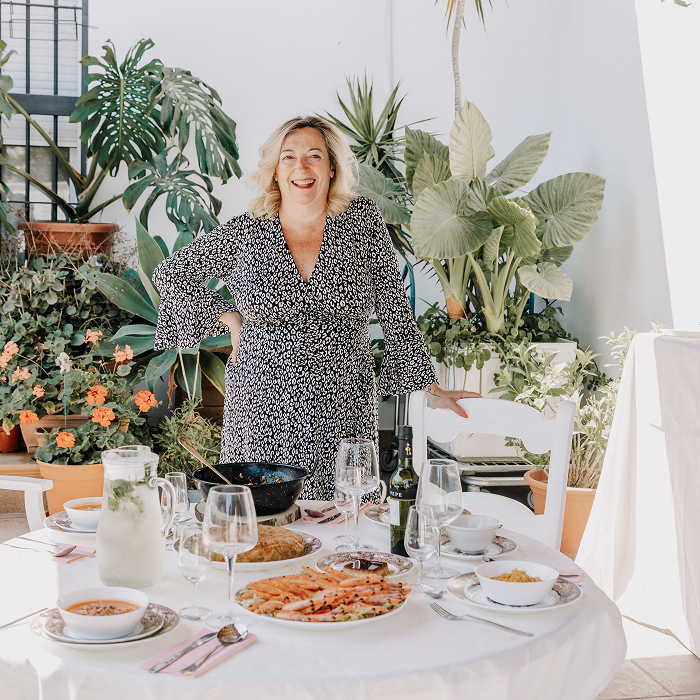
Can you imagine ending your cultural day inside the home of a local cook?
Our hosts open the doors of their homes to delight you with the most traditional dishes, prepared with an ingredient you won’t find in restaurants: time and the care of homemade cooking.
Don’t just visit Spain — experience it like a local. Book your Sazón experience and discover the true flavor of our culture.
Explore our experiences with local cooks.