
Planning a trip through Spain and deciding which monuments to prioritize can feel overwhelming due to the country’s immense historical richness.
In fact, failing to do so often turns a cultural tour into a stressful experience where artistic details and local legends go completely unnoticed amidst the crowds.
To prevent your trip from becoming a mere succession of photos without context, we have selected the most emblematic cathedrals that define Spanish identity.
This guide offers you practical information and the key aspects of each temple so you can optimize your time and enjoy Gothic, Renaissance, and Baroque architecture in all its splendor.
The 15 Most Spectacular Cathedrals in Spain
Spain has one of the largest concentrations of cathedrals in the world, many of them declared UNESCO World Heritage Sites.
Each of these buildings tells a chapter in the history of Europe, from the Reconquista to the splendor of the Spanish Empire.
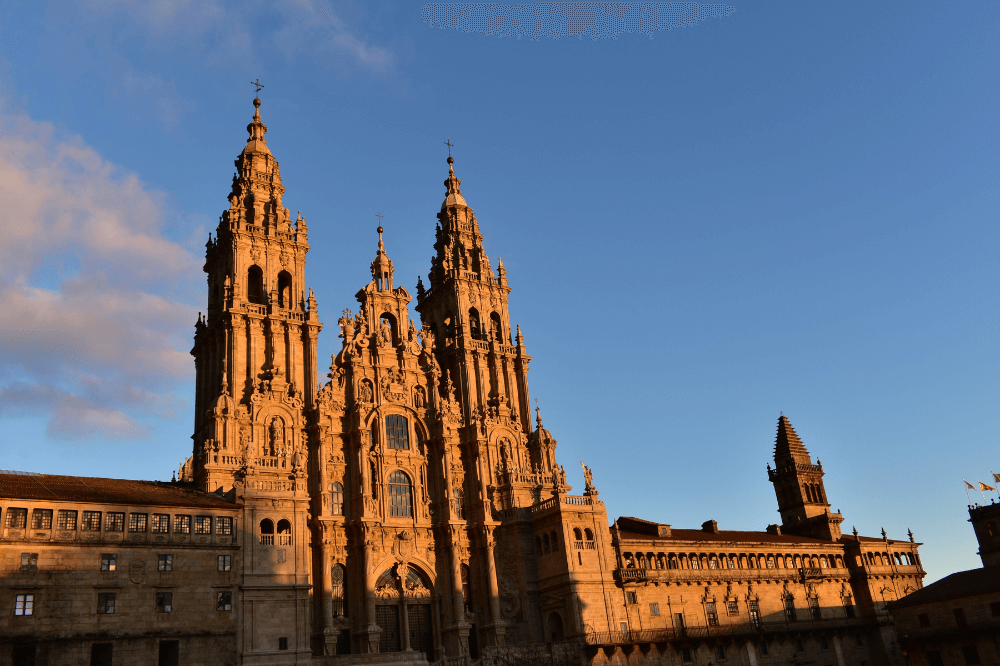
1. Cathedral of Santiago de Compostela
It is the final destination of the Camino de Santiago and one of the most important pilgrimage centers in Christianity.
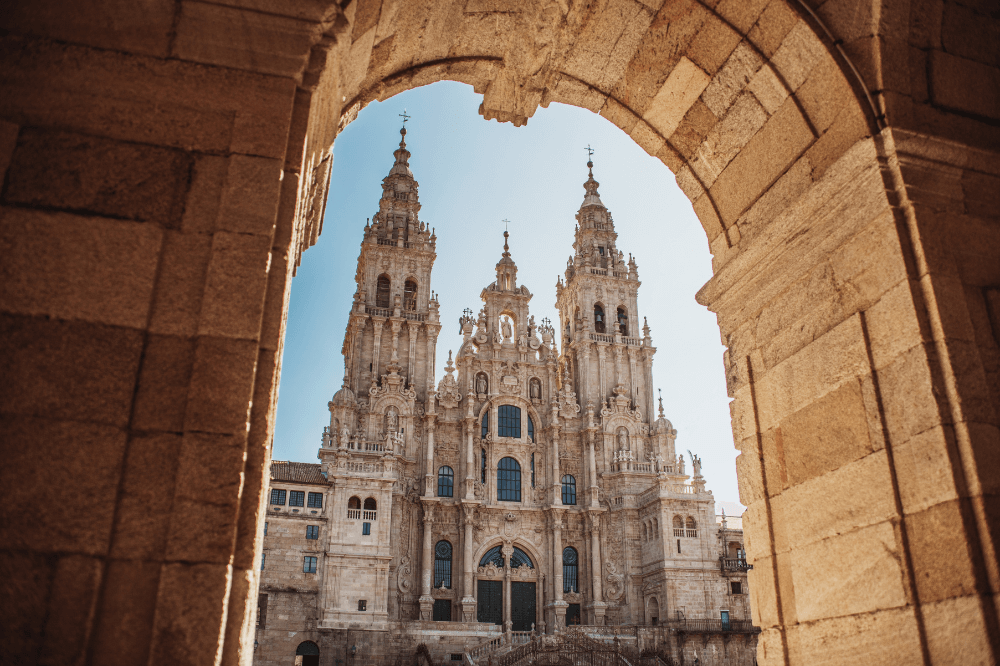
The interior houses the famous Botafumeiro and the Pórtico de la Gloria, a masterpiece of Romanesque sculpture.
It is recommended to book in advance to visit the rooftops and enjoy the panoramic views of the city.
2. Burgos Cathedral
It stands out as the only temple in Spain that holds the title of World Heritage Site independently.
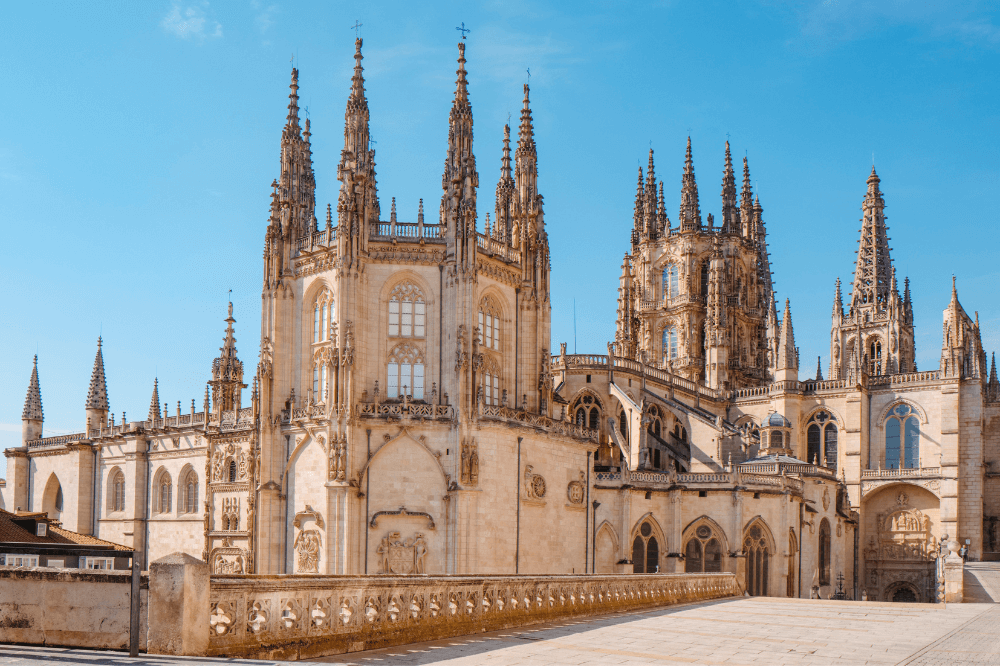
Its Gothic lacy spires in the French style are visible from almost any point in the city.
Do not forget to visit the tomb of El Cid and the impressive Cimborrio under the transept.
3. Seville Cathedral
It is the largest Gothic cathedral in the world and was built on the site of the former Almohad mosque. From that era, it preserves the Patio de los Naranjos (Courtyard of the Orange Trees) and the Giralda, the old minaret converted into a bell tower.
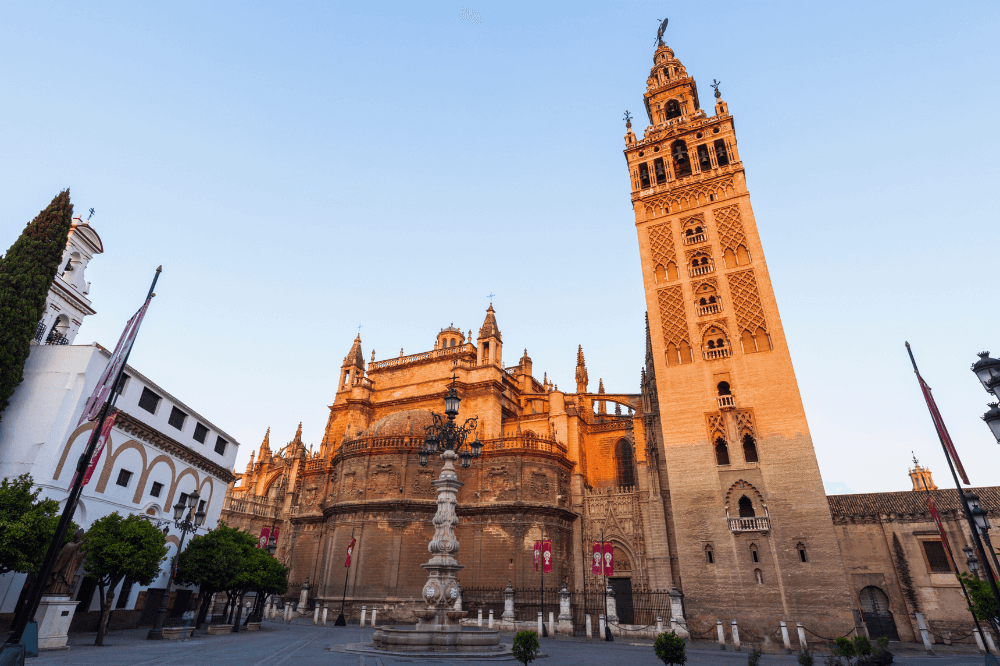
The access includes climbing the tower via ramps, which makes the ascent easier for viewing the historic center from above.
Home-Cooked Spanish meal on a rooftop with La Giralda views in Seville Center.
4. Toledo Cathedral
Known as the Primate Cathedral of Spain, it is a living catalog of Spanish Gothic art. TheTransparente, a Baroque sculptural work illuminated by an oculus in the vault, is one of its most unique elements.
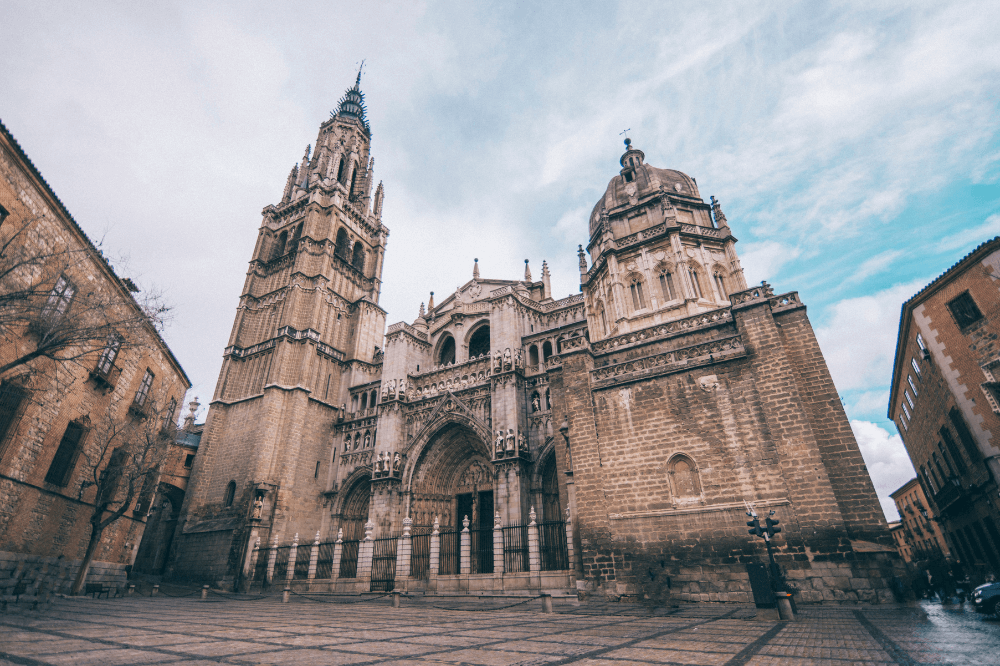
Its sacristy functions as a genuine art gallery with canvases by El Greco, Goya, and Velázquez.
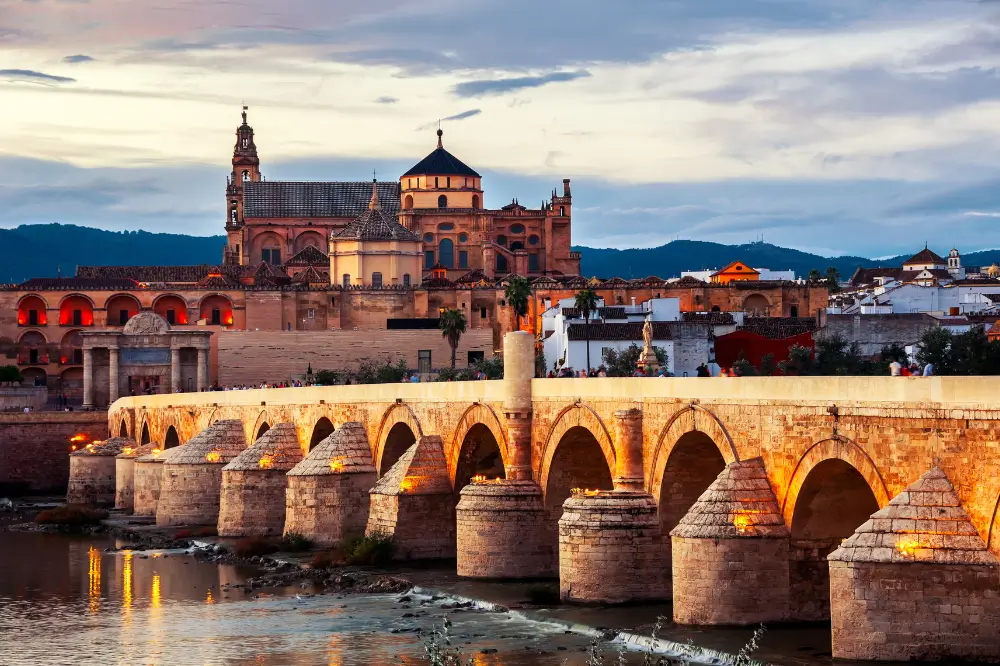
5. Mosque-Cathedral of Córdoba
It represents a unique synthesis between Islamic and Christian art. The forest of columns and horseshoe arches of the former mosque coexists with a Renaissance basilica built in its center after the Christian conquest.
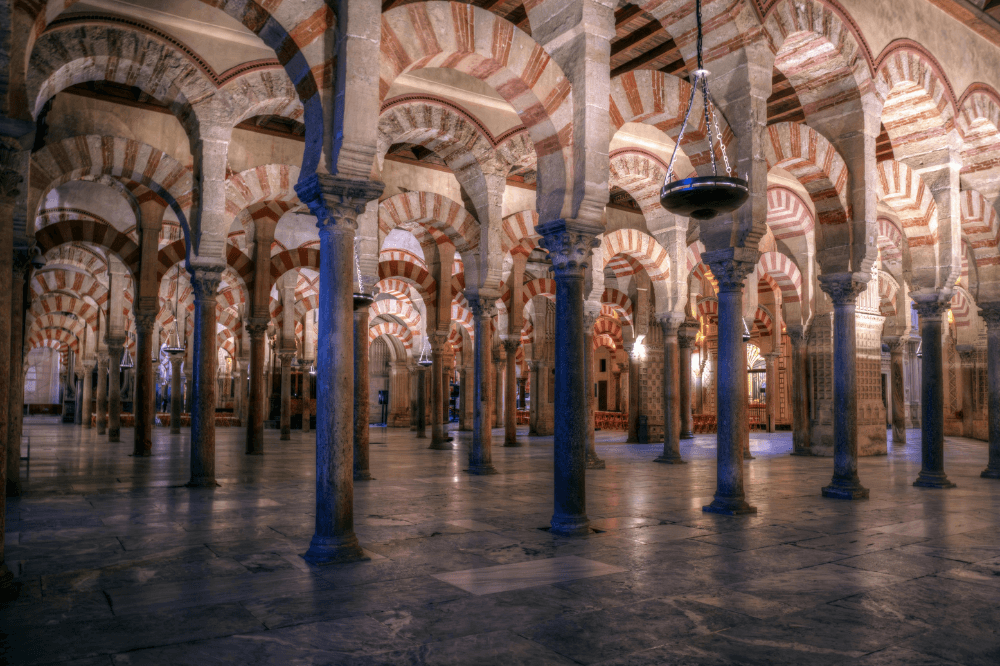
It is essential to purchase tickets in advance, especially if you wish to do the nighttime visit entitled “The Soul of Córdoba.”
6. León Cathedral
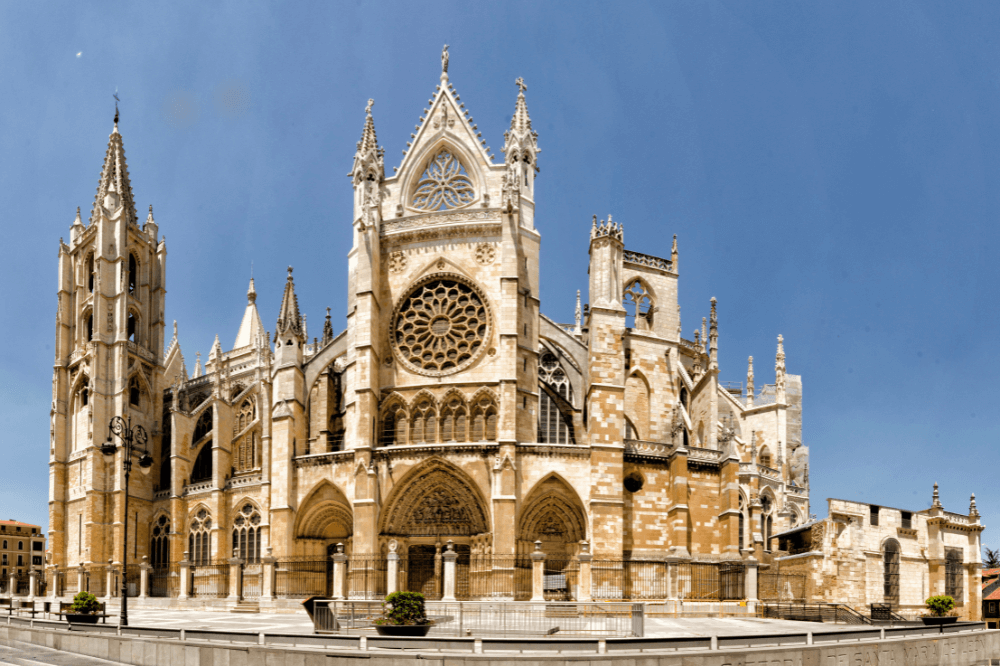
It is famous for its extensive collection of medieval stained glass windows, covering nearly 1,800 square meters.
The light that passes through these windows creates a unique visual effect inside, reducing the stone to its minimum expression. It is advisable to visit on sunny days to appreciate the intensity of the colors.
7. Palma de Mallorca Cathedral
Located facing the sea, it is known as the “Cathedral of Light” for its 61 stained glass windows and its largemain rose window, one of the largest in European Gothic architecture.
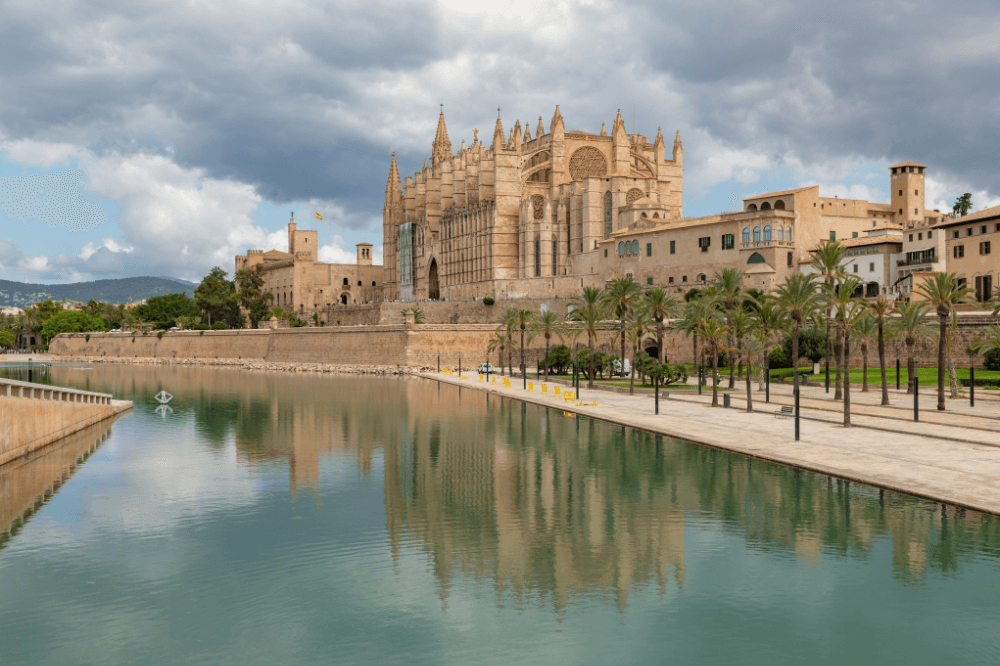
The temple features an interior renovation carried out by Antoni Gaudí and a contemporary ceramic mural by Miquel Barceló in the Chapel of the Holy Sacrament.
8. Salamanca Cathedral (New and Old)
Salamanca offers the peculiarity of havingtwo cathedrals joined together. The Old Cathedral is Romanesque in style, while the New Cathedral is a mix of late Gothic and Baroque.
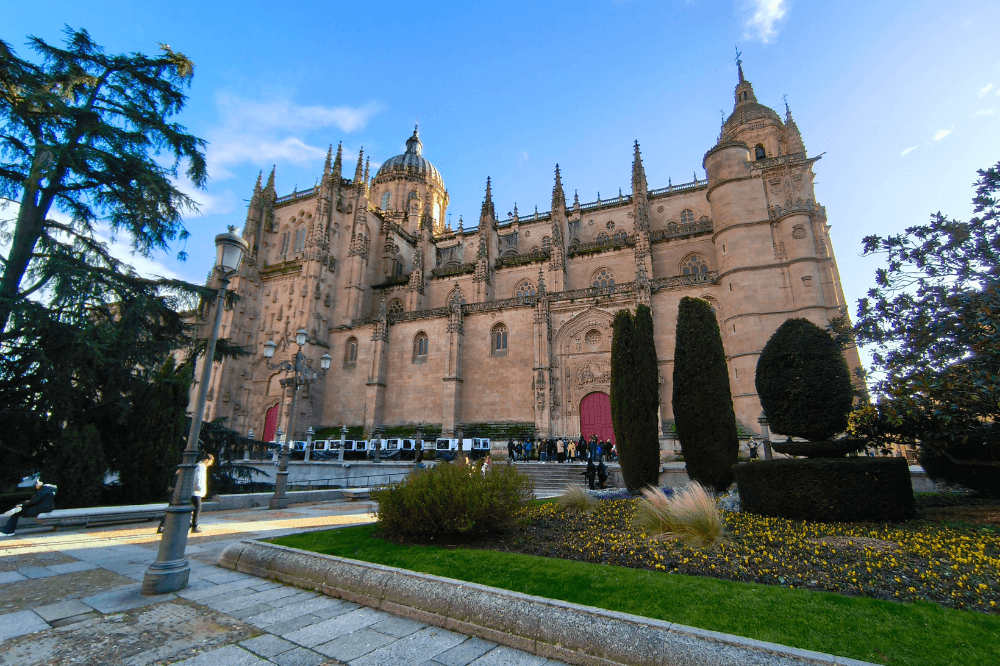
A curious detail for tourists is to look for the figure of an astronaut carved on the Puerta de Ramos of the New Cathedral during a restoration in 1992.
9. Granada Cathedral
This masterpiece of the Spanish Renaissance was designed to be the pantheon of the kings.
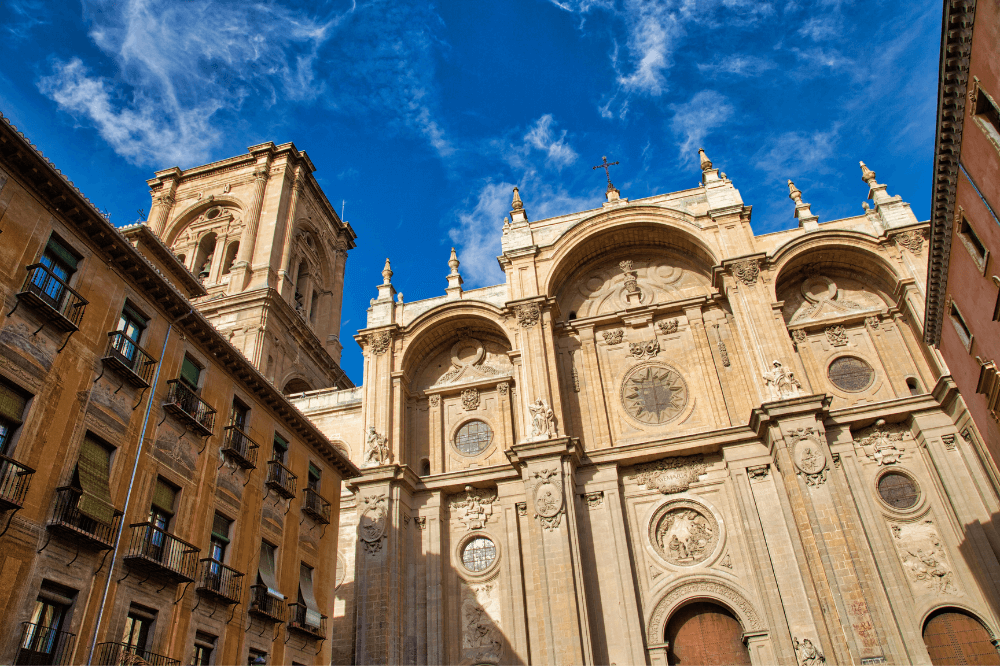
Although the Catholic Monarchs are buried in the adjacent Royal Chapel, the spaciousness and whiteness of the cathedral’s naves impress with their sobriety and height.
Entry to the Royal Chapel is usually purchased separately.
10. Segovia Cathedral
Nicknamed the “Lady of Cathedrals” for its elegance and dimensions, it was one of the last Gothic cathedrals built in Spain.
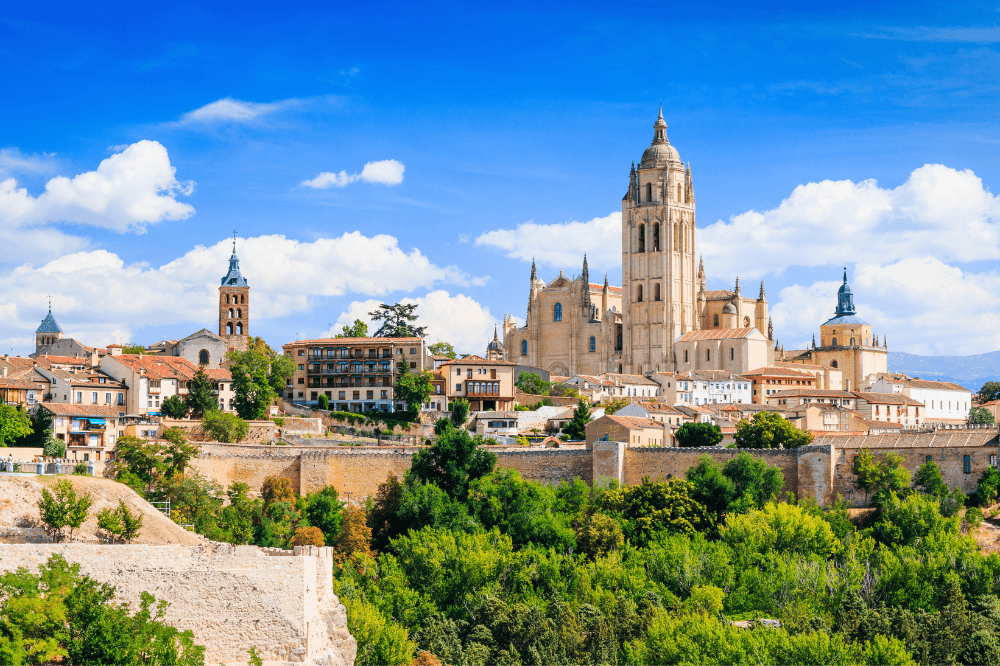
It is located on the Plaza Mayor and stands out for its cloister, which was moved stone by stone from the old Romanesque cathedral.
Guided tours of its tower offer a unique perspective of the Alcázar and the Sierra de Guadarrama.
11. Basilica of Our Lady of the Pillar (Zaragoza)
Although technically a co-cathedral, it is the icon of Aragon and one of the most visited Marian centers. Its eleven domes decorated with colored tiles are unmistakable.
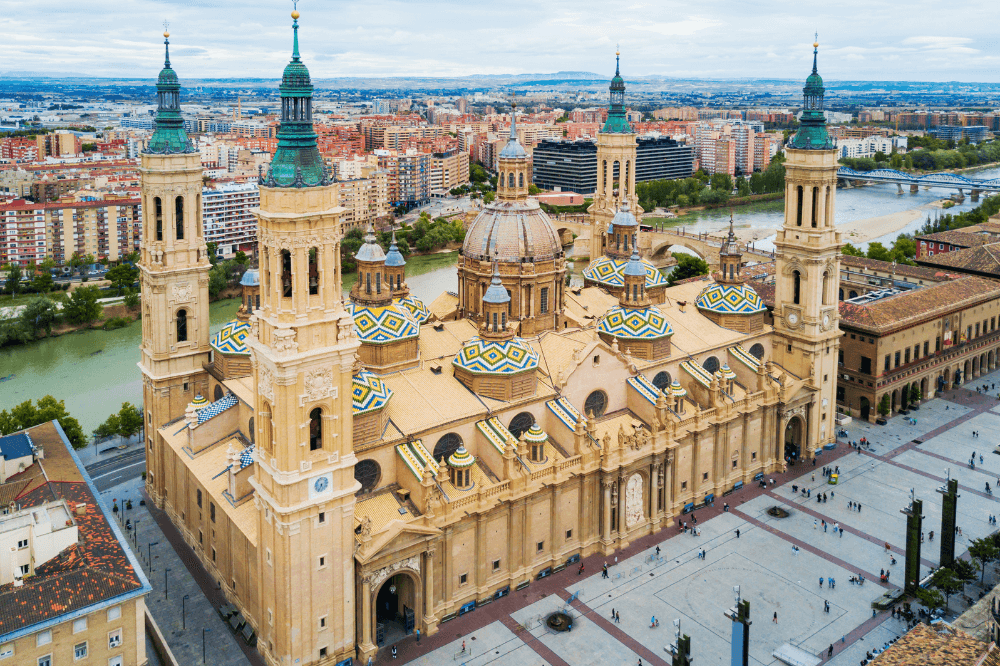
Inside, there are frescoes by Goya and the Holy Chapel that guards the pillar where, according to tradition, the Virgin appeared.
12. Cathedral of the Holy Cross and Saint Eulalia (Barcelona)
Located in the heart of the Gothic Quarter, it stands out for its neo-Gothic façade and its 14th-century cloister. In the latter, thirteen white geese live in honor of the age Saint Eulalia was when she was martyred.
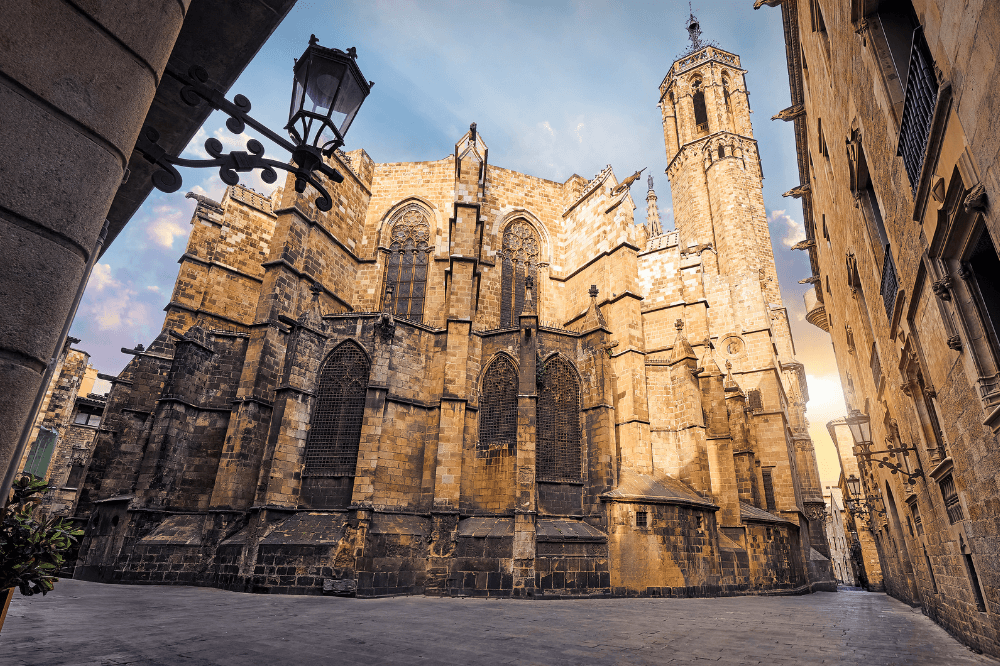
Access to the upper terrace allows you to closely observe the gargoyles and the street layout of the old city.
13. Almudena Cathedral (Madrid)
It is the most important religious building in the capital and stands out for its contrast of styles: a neoclassical exterior to fit in with the Royal Palace and a neo-Gothic interior with modern decorations.
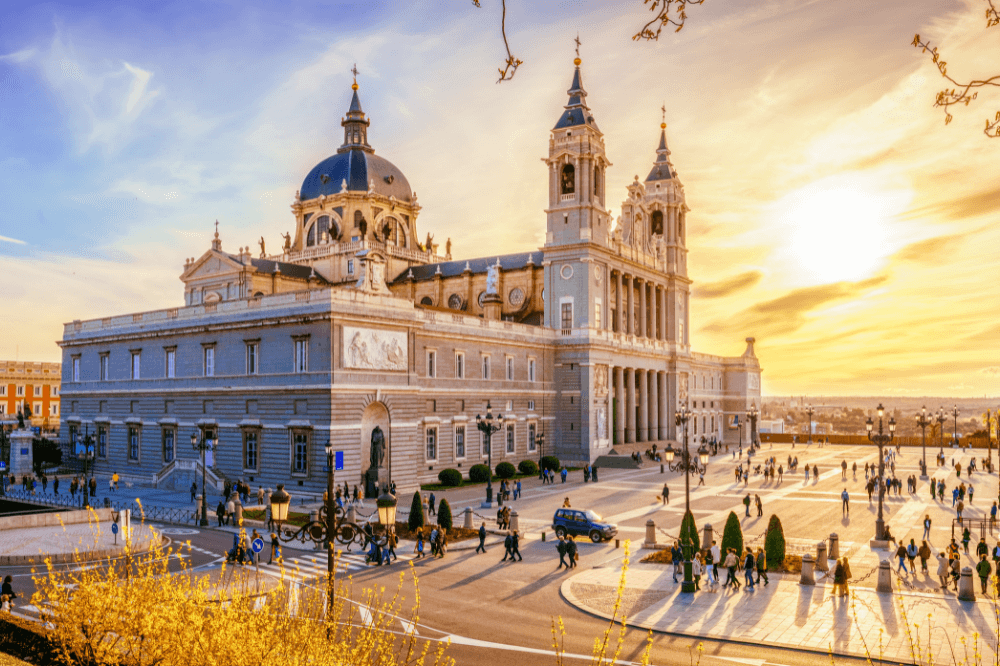
The paintings on the dome and apse are contemporary in style. The neo-Romanesque crypt is another essential part of the visit due to its imposing architecture.
Galician Octopus, and Traditional Spanish Flavors with Stunning Royal Palace Views in Madrid.
14. Cuenca Cathedral
It is one of the earliest examples of Gothic architecture with Anglo-Norman influence in Castile. Its façade has been rebuilt several times, the last time following a collapse at the beginning of the 20th century.
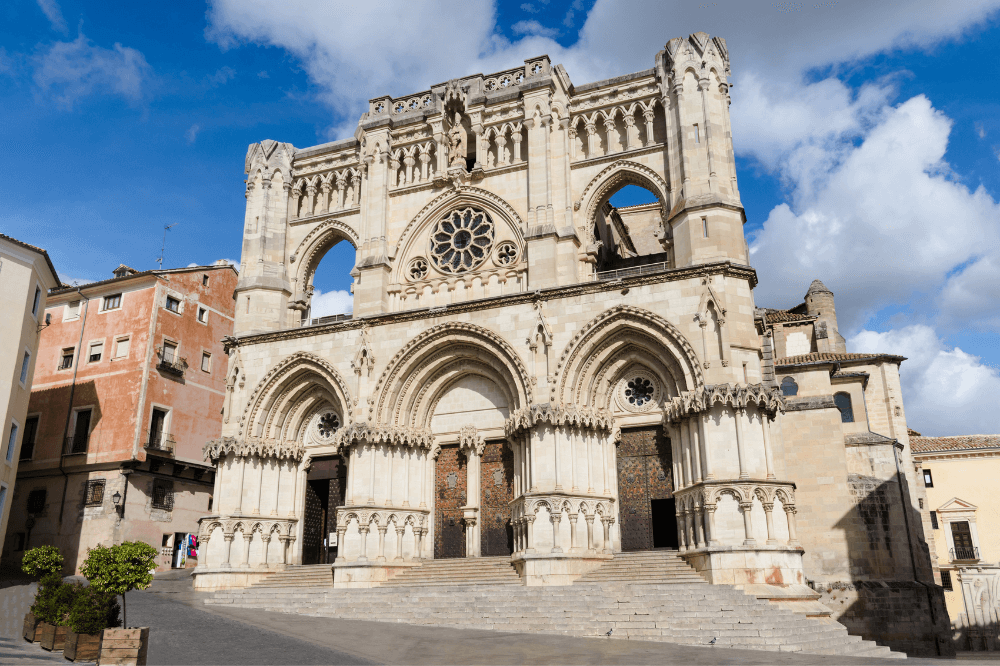
The interior houses one of the best collections of wrought iron grilles in Spain and a labyrinth of chapels that reflects centuries of artistic evolution.
15. Oviedo Cathedral
It is the starting point of the Primitive Way to Santiago.
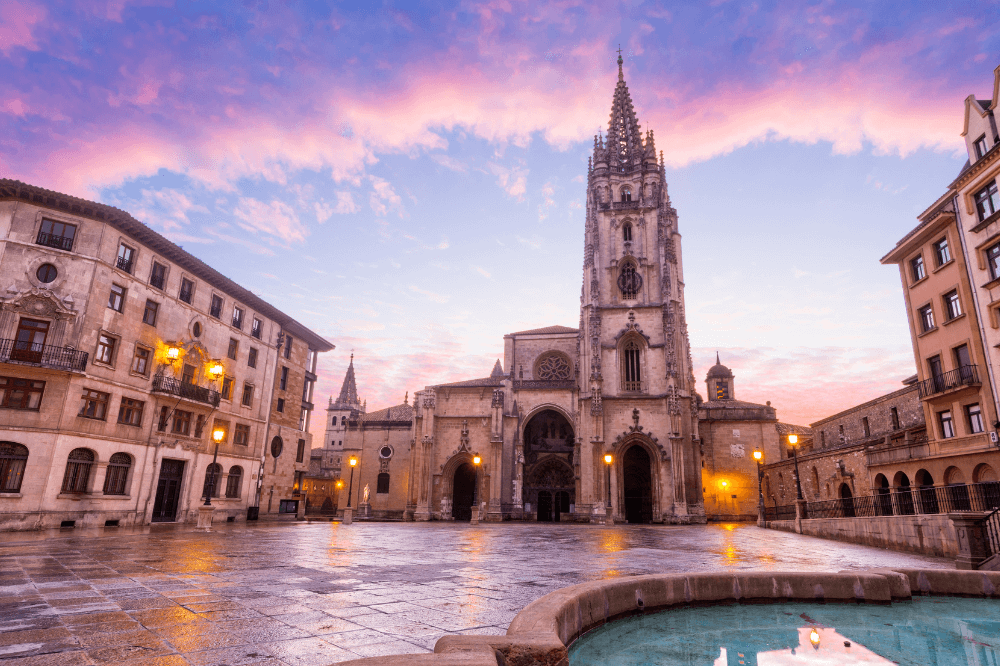
Its most valuable element is the Holy Chamber, declared a World Heritage Site, which safeguards the Crosses of Victory and of the Angels, symbols of Asturias.
Its unique Flamboyant Gothic tower dominates the landscape of the old city.
Other Essential Temples (But Not Cathedrals)
There are religious buildings that, despite not holding cathedral status, are mandatory stops for any lover of architecture and history.
Sagrada Familia (Barcelona)
It is Antoni Gaudí’s masterpiece and the most visited monument in Spain. Its design, based on natural forms, and its towers that dominate Barcelona’s skyline make it a unique building in the world.
Authentic Catalan dining in a modern outdoor setting near Sagrada Familia, Barcelona.
It is strongly recommended to purchase tickets weeks in advance and to go up the towers to observe the details of the sculpted façades.
Royal Basilica of San Isidoro (León)
This Romanesque temple houses thePantheon of the Kings, known as the “Sistine Chapel” of Romanesque art for its exceptionally well-preserved frescoes.
In addition to the royal tombs, its museum guards the Chalice of Doña Urraca, which some researchers identify with the Holy Grail.
Royal Monastery of San Lorenzo de El Escorial (Madrid)
Considered in its time the eighth wonder of the world, this complex includes a basilica of colossal proportions, a monastery, and thePantheon of the Kings, where almost all the Spanish monarchs rest.
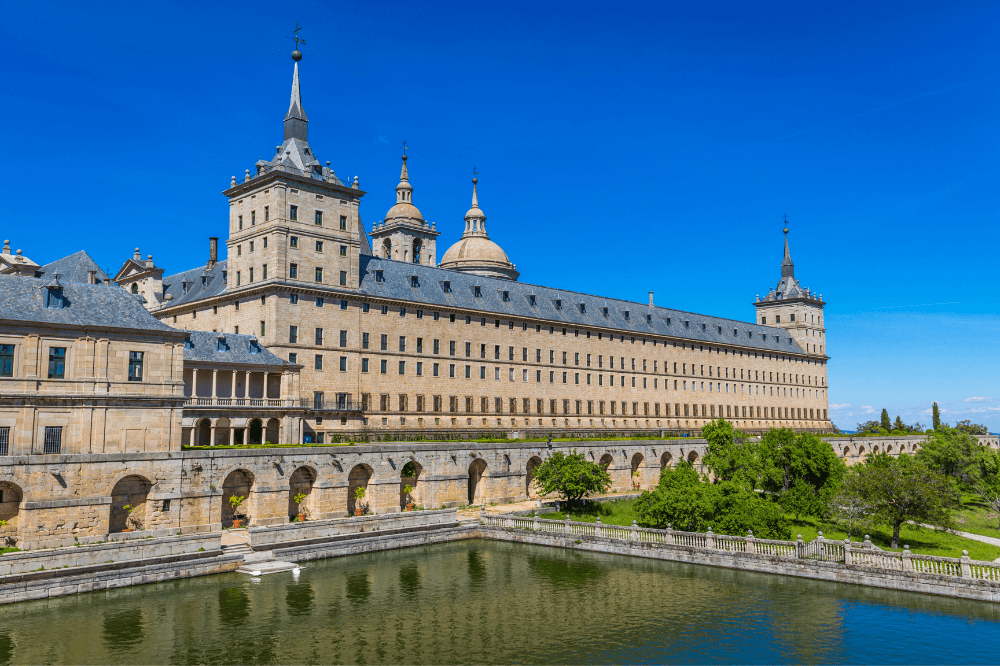
Its Herrerian style stands out for its geometric sobriety and the monumentality of its great dome.
Basilica of Santa María del Mar (Barcelona)
It is the best example of pure Catalan Gothic. Unlike the cathedrals, this temple was built by the very neighbors of the Ribera district.
Its interior is characterized by a horizontal spaciousness and a cleanliness of lines that allows for exceptional acoustics, ideal for attending one of its concerts.
Monastery of San Juan de los Reyes (Toledo)
It was erected by the Catholic Monarchs to commemorate their victory in the Battle of Toro.
The most outstanding feature for visitors is its Isabeline Gothic cloister, decorated with astonishing ornamental richness that combines Christian elements with Mudéjar influences.
Culminate Your Journey with the Authentic Taste of Spain
After admiring the grandeur of our cathedrals, we invite you to discover the most living monument of our culture: its home cooking.
What if your next great experience took place not in a restaurant, but in the home of a local chef?
Book your experience with Sazón and connect with the soul of the place you are visiting.
Because the true history of Spain is not only read in the stone of its temples, it is also savored in its homes.
Explore our experiences with local cooks.