
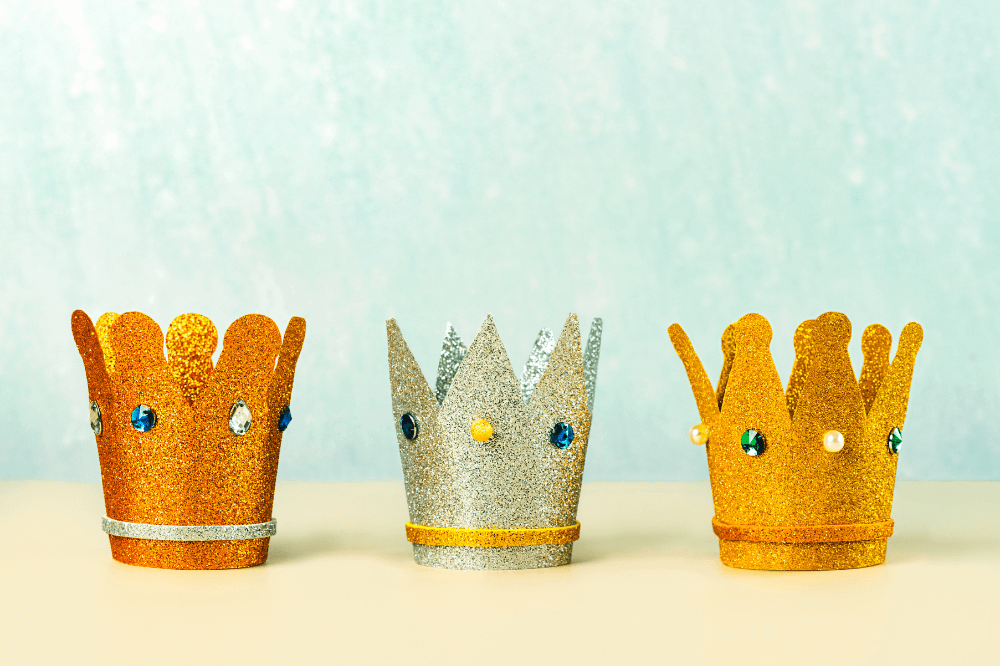
If your trip to Spain coincides with the beginning of January, you’re in for one of the most anticipated and colorful celebrations of the year: the Cabalgata de Reyes (Three Kings Parade).
This event, which takes place on the evening of January 5th, is much more than just a parade—it’s the official welcome for the Three Wise Men from the East: Melchior, Gaspar, and Balthazar, just before they deliver gifts to homes across the country.
For travelers, witnessing this tradition offers a unique window into Spanish culture, filled with collective excitement and widespread participation.
We can assure you: the energy in the streets—among the spectacular floats, the music, and the shower of candies—is truly unforgettable.
What Is the Three Kings Parade?
This parade, held in almost every city and town across Spain, is far more than just a festive event—it’s a living reenactment of the arrival of the Three Wise Men from the East: Melchior, Gaspar, and Balthazar.
For Spaniards, this night is even more important than Christmas Eve itself, as it’s when most children receive their presents, echoing the biblical tradition of offering gifts.
The parade usually begins at sunset (typically between 5:00 PM and 7:00 PM) and winds its way through the main streets of the town or city.
You’ll see impressive themed floats, marching bands, and royal pages who toss thousands of candies into the crowds.
7 Insider Tips to Enjoy the Three Kings Parade in Spain
Get ready to dive into the magic! Here are all the essential tips to make the most of this unforgettable night.
1. Arrive Early
Even though the parade doesn’t begin until sunset, planning to arrive well in advance is crucial.
The Cabalgata is a major event that draws large crowds, and the best viewing spots fill up quickly. So, if you want a clear view or to stand right by the barriers where the Kings toss candies, we recommend arriving at least one to two hours before the official start time.
A great tip is to avoid the beginning and end points of the route—these tend to be the most crowded. Instead, aim for a middle section of the parade route.
2. How to Get There
Our top recommendation: forget about driving.
Most of the streets along and around the parade route will be closed to traffic for several hours, and finding parking will be virtually impossible.
The best way to get to your viewing spot is by using public transportation—ideally the metro or commuter trains, if available in the city.
Keep in mind that many bus lines will change their routes or may stop running through the city center altogether.
If you’re taking the metro, we suggest not getting off at the station closest to the parade route. Instead, choose a stop one or two stations earlier and walk the rest of the way.
This will help you avoid the large crowds that gather at the nearest exits and ensure a smoother arrival and departure from the parade area.
3. Choose the Ideal Spot
Finding the perfect spot depends on your priorities.
If you’re traveling with children or want to fully experience the candy-throwing madness, look for wider sections of the parade route where floats have more space to maneuver—they usually slow down there.
Corners and large plazas are strategic points where the parade often stops or slows, increasing your chances of catching some treats.
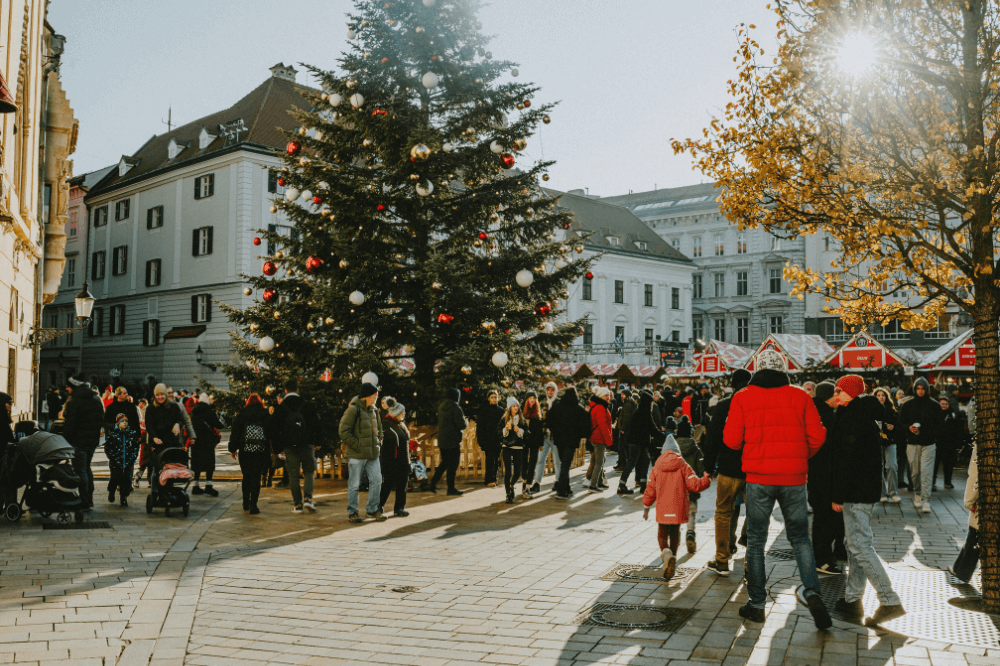
On the other hand, if you prefer a calmer and more scenic experience, opt for straight stretches of street that aren’t surrounded by heavy commercial activity.
Avoid standing in the front rows along the metal barriers if your goal is to take photos without being jostled by the crowd—it’ll be harder to move around.
And don’t forget: in many cities, there are designated areas for people with reduced mobility. Check ahead of time if you or someone in your group needs access to one.
Explore our experiences with local cooks.
4. Dress Warmly
Don’t forget that this is mid-winter in Spain, and the Cabalgata takes place during the coldest hours of the day.
While the event is thrilling, spending several hours standing around before and during the parade can be quite uncomfortable if you’re not properly dressed.
We recommend layering your clothing: several thin layers retain heat better than one thick garment.
Make sure to wear gloves, a scarf, a hat, and warm, comfortable footwear—your feet will be the first to feel the cold.
If you’re traveling with children, bringing an extra blanket or a thermos with a hot drink can make all the difference, keeping them comfortable and happy while they wait.
Remember: while the magic of the Cabalgata is contagious, it doesn’t keep you warm.
5. Bring a Bag or Backpack
This is a practical and essential tip for anyone attending the Cabalgata—especially for visitors who want to take home a sweet memory from the night.
Throughout the parade, the royal pages and even the Three Kings themselves throw thousands of individually wrapped candies into the crowd.
The sheer amount of sweets raining down is surprising and a big part of the fun.
To avoid stuffing your pockets—or worse, dropping your candy on the ground—make sure to bring a sturdy tote bag or a small backpack with you.
This way, you can comfortably and safely collect all the “treasures” tossed your way.
Plus, the backpack will come in handy for carrying a water bottle, a snack, or even your scarf if you warm up during the event.
6. Be Careful When Collecting Candy
The thrill of candies raining from the sky can make people rush to grab them, sometimes leading to shoving or risky situations—especially near the parade floats.
While joining in the candy “hunt” is part of the fun, your safety should always come first.
If you’re traveling with kids, hold your ground and make sure they don’t get too close to the float wheels or step into restricted areas. If a piece of candy falls too far away or under the barriers, it’s often best to just let it go.
Also, keep in mind that the ground might be wet or slippery.
Enjoy the magic of the show, but always stay aware of the moving floats and the crowd around you.
It’s a beautiful experience, but using common sense is key to making sure it’s safe and enjoyable for everyone.
7. The Perfect Finale: Roscón and Hot Chocolate
Once the final float has passed and the crowd begins to disperse, it’s the perfect time to wrap up the evening in true Spanish fashion—with a slice of Roscón de Reyes.
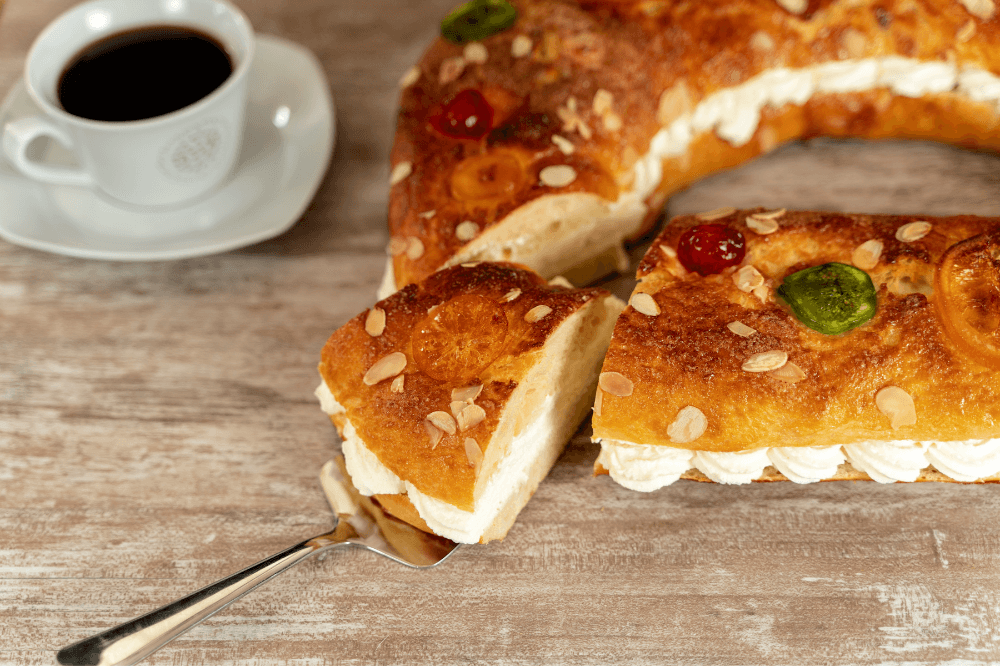
This crown-shaped sweet bread, decorated with candied fruits that resemble jewels, is the star dessert of the season and the undisputed highlight of the morning of January 6th.
Look for a traditional bakery or a cozy café serving roscón alongside a thick, comforting cup of hot chocolate.
It’s a beloved ritual in Spain and a delicious way to warm up after standing out in the winter chill.
And here’s the fun part: the roscón contains two hidden surprises—whoever finds the dry bean (haba) is traditionally expected to pay for next year’s cake, while the one who discovers the tiny king figurine is “crowned” and said to have good luck.
Be sure to try it—you’ll leave with a sweet (and possibly lucky!) memory of this cherished tradition.
Best Cities to Experience the Three Kings Parade
While the Cabalgata de Reyes is celebrated with enthusiasm across every corner of Spain, a few cities truly stand out for the scale and tradition of their parades.
Madrid
The capital is, without a doubt, a benchmark for its scale.
Madrid’s Cabalgata parades down the Paseo de la Castellana and ends at Plaza de Cibeles, offering a high-budget show with floats that look like true floating works of art.
The excitement is palpable and the lights are stunning, but expect large crowds.
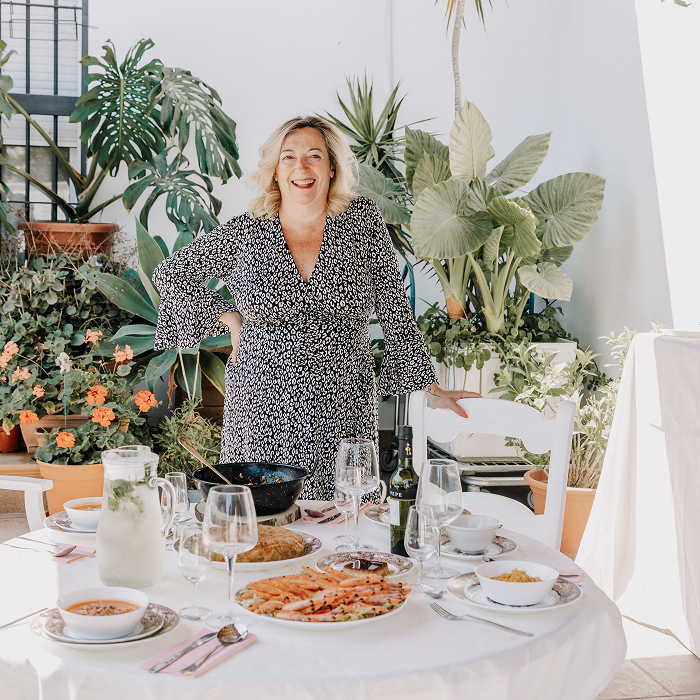
Spanish style home dining in an outdoor setting in the heart of madrid’s center neighborhood
Barcelona
The Catalan capital is famous because the Three Wise Men usually arrive by sea, docking at the Old Port (Port Vell) before beginning their route.
This arrival by boat adds a unique scenic element.
The parade also stands out for the creativity of its floats and its multicultural atmosphere, making it a must-see if you’re visiting Catalonia.
Sevilla
Seville’s Cabalgata, organized by the Ateneo, is one of the longest and most traditional in Spain, known for the beauty of its floats.
Many of them are inspired by Andalusian folklore and have a more classic tone.
It’s also famous for the large quantity and high quality of the gifts and sweets handed out, drawing thousands of people to the streets.
Home cooked spanish meal on a rooftop with La Giralda views in Seville center
And After the Magic… Tradition on the Plate
You’ve just witnessed the most magical night in Spain, felt the collective excitement in the streets, and experienced a tradition that defines us.
Now, to make your cultural immersion truly complete, we invite you to go one step beyond the lights and the floats.
The true soul of a place lies in its flavors—those lovingly passed down through generations by our grandmothers.
We suggest stepping away from the usual tourist routes and walking through the doors of a real Spanish home.
It’s there, with local home cooks, where you’ll taste the most traditional dishes, made with the same care and dedication you saw in the parade.
You’re not just booking a dinner—you’re reserving an unforgettable experience where, for a few hours, you’ll live like a local.
Dare to taste Spanish culture at the table!
Explore our experiences with local cooks.