
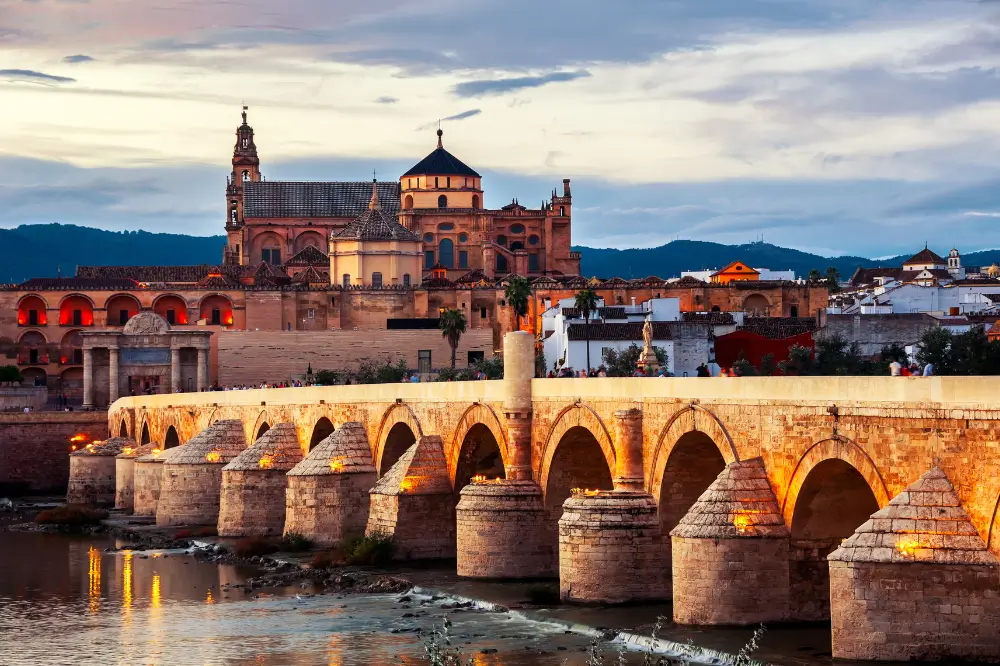
The Mosque-Cathedral of Córdoba is not a monument to be visited in a hurry.
In this guide you will find all the updated information on rates, schedules, and hidden corners so that your visit to the greatest treasure of the Islamic West is smooth, mindful, and enriching.
Explore our experiences with local cooks in Cordoba.
A 1,300-Year-Old Treasure
The Mosque-Cathedral of Córdoba is an architectural palimpsest unique in the world.
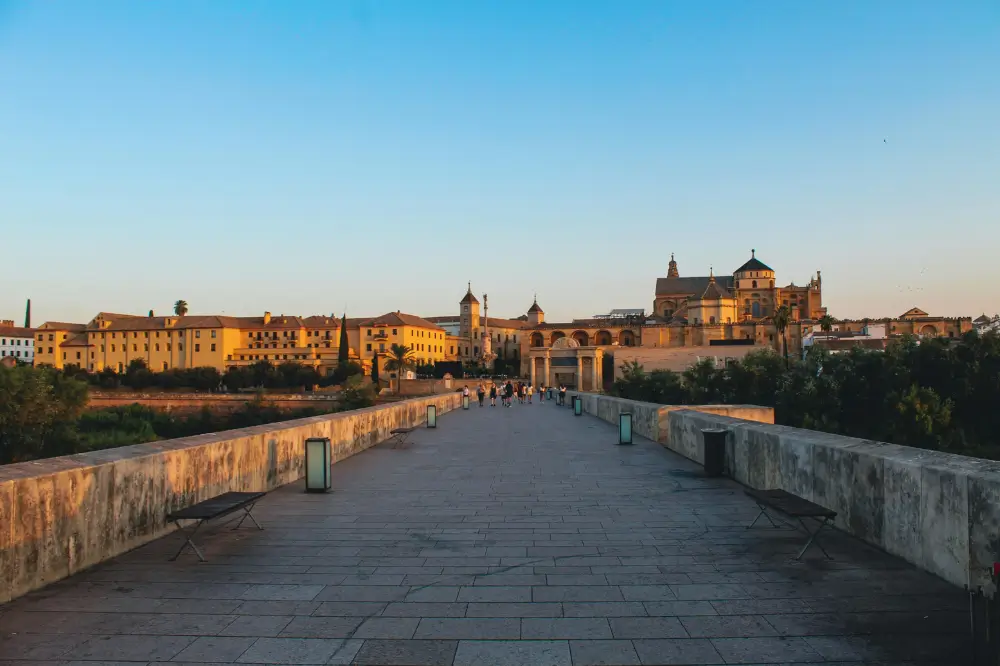
Its walls narrate the evolution of Al-Andalus and the subsequent Christian Reconquest, superimposing styles ranging from Caliphal to Baroque.
Covering 24,000 square meters, the building is a living testament to the coexistence and conflict of diverse cultures over thirteen centuries.
Its importance is such that it is part of the UNESCO World Heritage Site.
In 2026, the monument takes on special relevance following the completion of restoration work derived from the incident that occurred in 2025.
Current visitors can enjoy a reinforced structure and newly recovered areas that showcase the original splendor of its finishes.
Planning Your Visit: Tickets and Prices
Organizing your ticket in advance is the first step to ensuring a pleasant stay in Córdoba.
Prices remain stable, but it is essential to know the discount brackets to adjust your budget.
Ticket Types and Current Costs
- General adult admission: €13
- Students (up to 26 years old) and Young Card holders: €9
- Children aged 10 to 14: €7
- Seniors over 65 residing in the European Union: €10
- Free admission: Children under 10 and those born or residing in Córdoba
Where to Buy
It is recommended to purchase tickets exclusively on the official website.
Buying directly avoids unnecessary surcharges from third-party platforms and ensures availability in your desired time slot.
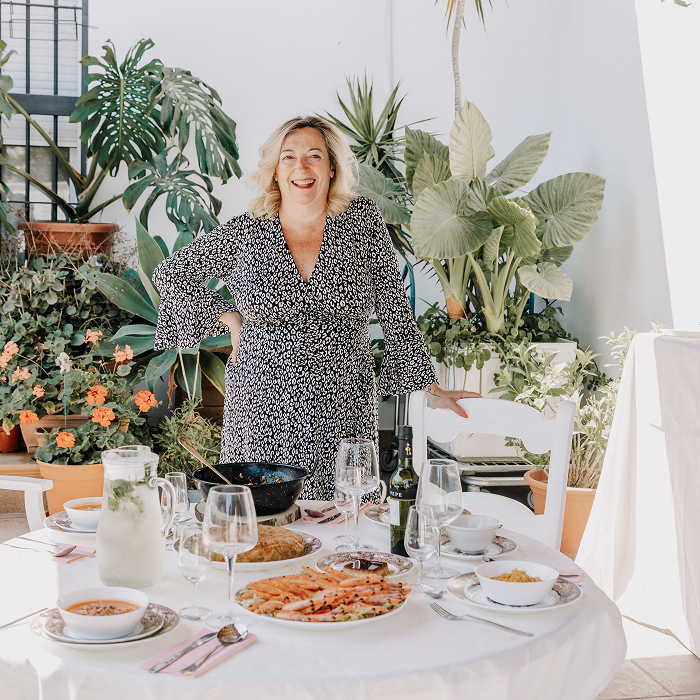
A menu with a taste of Spanish home.
Recommended Supplements:
- Audioguide (€5): A worthwhile investment to distinguish the different construction phases, from Abd al-Rahman I to Almanzor.
- Official Guided Tours (€22-28): Include entry and allow skip-the-line access. The historical context provided by an expert helps interpret details that go unnoticed to the naked eye.
What is the Best Time to Go?
The experience changes dramatically depending on the time chosen. Managing light and crowd flow will determine the quality of your memory.
For light lovers (10:00 a.m. – 12:00 p.m.): This is the interval when sunlight penetrates obliquely through the upper windows. The visual effect on the forest of columns and horseshoe arches is stunning.
To avoid crowds (after 4:00 p.m.): From this time onwards, most organized groups from Seville or Málaga begin their return, allowing for a much quieter visit.
The Nighttime Experience: “The Soul of Córdoba”
This guided nighttime visit costs €20. It uses immersive storytelling, lighting effects, and the scent of incense to evoke the spirituality of the temple.
It is important to remember that photography is not permitted during this tour to maintain the atmosphere of reverence.
Visiting the Mosque of Córdoba for Free
There is an option for those traveling on a tight budget or who prefer absolute calm.
Free access is from Monday to Saturday, 8:30 a.m. to 9:30 a.m. (except on days of special celebrations).
Cordoban menu with show cooking on a rooftop at a Spanish mom’s home in Córdoba.
Pros and Cons:
- Advantages: The silence is absolute and the savings are significant.
- Limitations: You only have about 50 minutes. Visiting the Cathedral area is not permitted due to Mass preparation, and some side areas may be restricted.
What to See Inside: The Must-Sees of the Mosque
Once inside, the scale of the monument can be overwhelming. These are the key points that structure the visit.
The Forest of Columns
The prayer hall houses 856 columns of marble, granite, and jasper.
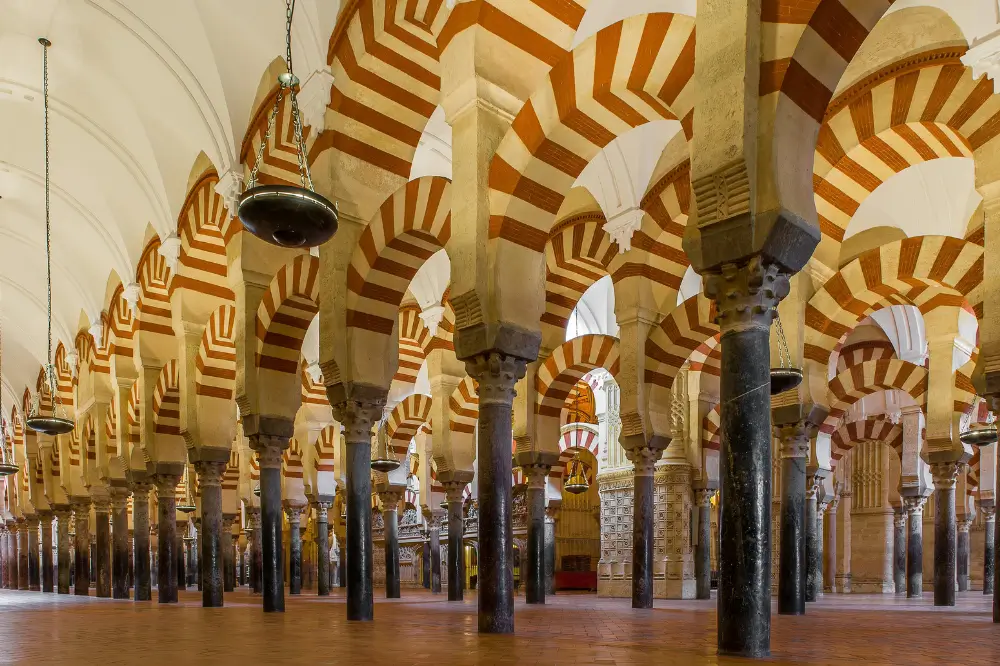
Its most distinctive feature is the double arches: a lower horseshoe arch and an upper semicircular arch, combining red brick and white stone.
This architectural solution allowed the ceiling to be raised and improved lighting.
The Mihrab and the Qibla
This is the focal point of prayer.
It stands out for its Byzantine mosaics of glass and gold, sent by the emperor of Constantinople as a gift to Caliph Al-Hakam II.
Unlike other mosques, the Qibla of Córdoba is not exactly oriented towards Mecca.
The Renaissance Cathedral
In the 16th century, a cathedral nave was inserted into the center of the Islamic structure.
Although it involved the destruction of part of the Caliphal arcade, the result is a masterpiece of the Plateresque and Renaissance style that creates a unique visual contrast in the history of art.
Courtyard of the Orange Trees
This is one of the oldest walled gardens in Europe.
Originally it was the place for ritual ablutions. Today it is the perfect space to rest in the shade of the trees before heading outside.
The Bell Tower
Access requires a separate ticket costing €3.
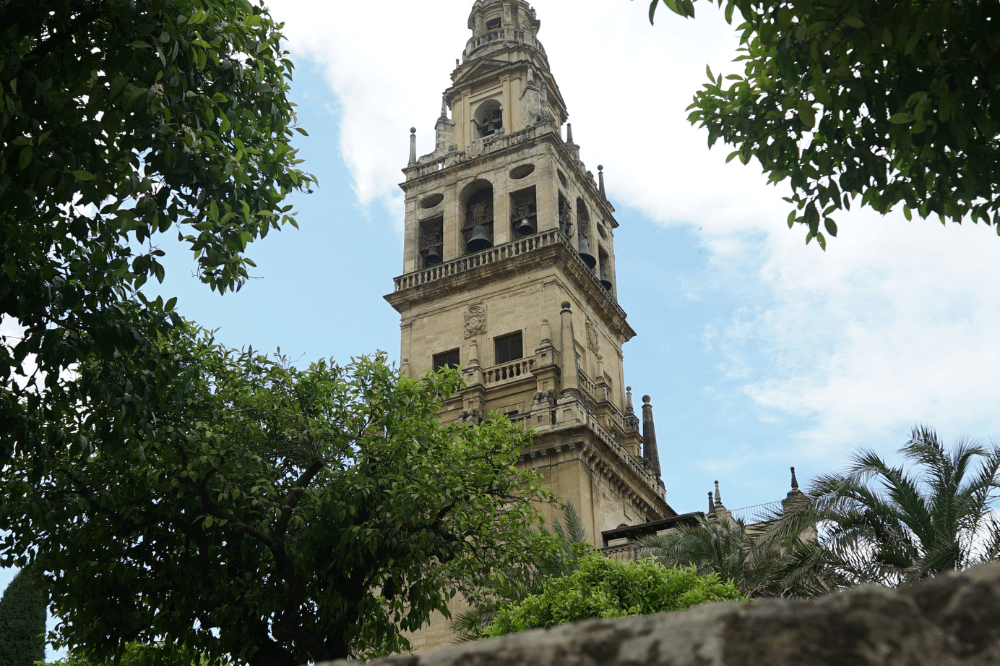
After climbing its 200 steps, you obtain the best panoramic views of the Jewish Quarter, the Guadalquivir River, and the Roman Bridge.
Hidden Gems and Curiosities for the Attentive Visitor
- The Starfish Fossil: On the exterior wall on Torrijos Street, there is a small fossil integrated into the stone, popularly known as the “Wishing Star.”
- Roman Mosaics: Under a glass panel in the floor, you can see the remains of the Visigothic basilica of San Vicente, upon which the original mosque was built.
- Roman Milestones: In the Courtyard of the Orange Trees, columns that marked distances on the ancient Via Augusta are preserved.
- The Cross Carved by the Prisoner: According to legend, a Christian captive carved a small cross on one of the columns using only his fingernails. It is protected by a metal grille.
Healthy Cordoban menu with outdoor dining near the Mezquita.
Etiquette Rules and Practical Tips
- Dress code: Out of respect for the religious nature of the site, it is mandatory to cover shoulders and knees. The use of caps or hats indoors is not permitted.
- Photography: The use of cameras without flash or tripod is allowed during daytime hours.
- Behavior: A low tone of voice should be maintained. Access with pets or large bags or backpacks is not permitted.
- Accessibility: The ground floor is fully accessible for wheelchair users, although climbing the tower is excluded for architectural reasons.
Frequently Asked Questions (FAQ)
Answering these common questions will help you finalize planning your day.
How much time is needed to visit the Mosque?
It is recommended to set aside between 90 and 120 minutes. Less time will prevent appreciating the transition of styles and the details of the Mihrab.
Can Muslims pray in the Mosque of Córdoba?
No. Currently, the building is owned by the Church and functions as a Catholic cathedral. Islamic prayer is not legally permitted inside.
Why doesn’t the Mihrab face Mecca?
There are several theories. Some historians point to the tradition of the Umayyads of Damascus (who faced south), while others suggest it was due to adaptation to the Roman urban layout of Córdoba at the time.
What is the best exterior view?
The most complete image is obtained by crossing the Roman Bridge to the Torre de la Calahorra. From there, the silhouette of the Mosque-Cathedral stands out against the city’s skyline.
Cordoban tapas and seafood paella with the best views in Córdoba’s historic center.
Top Off Your Visit: Savor Córdoba with Sazón
At Sazón, we believe that culture is not only visited, it is savored. That is why we invite you to rediscover the Spanish gastronomic legacy alongside those who know it best: our local home chefs..
Can you imagine ending your day in Córdoba by crossing the threshold of an authentic home to taste the dishes that have nourished generations?
Our hostesses open the doors of their houses to offer you an unfiltered experience, cooked with the same care and attention that our grandmothers put into their cooking.
Don’t settle just for the postcard image of the monument. Experience Córdoba like a local, share a table, and discover our culture in capital letters through its most traditional flavors.
Book your experience with Sazón and turn your trip into something unprecedented.
Explore our experiences with local cooks.