
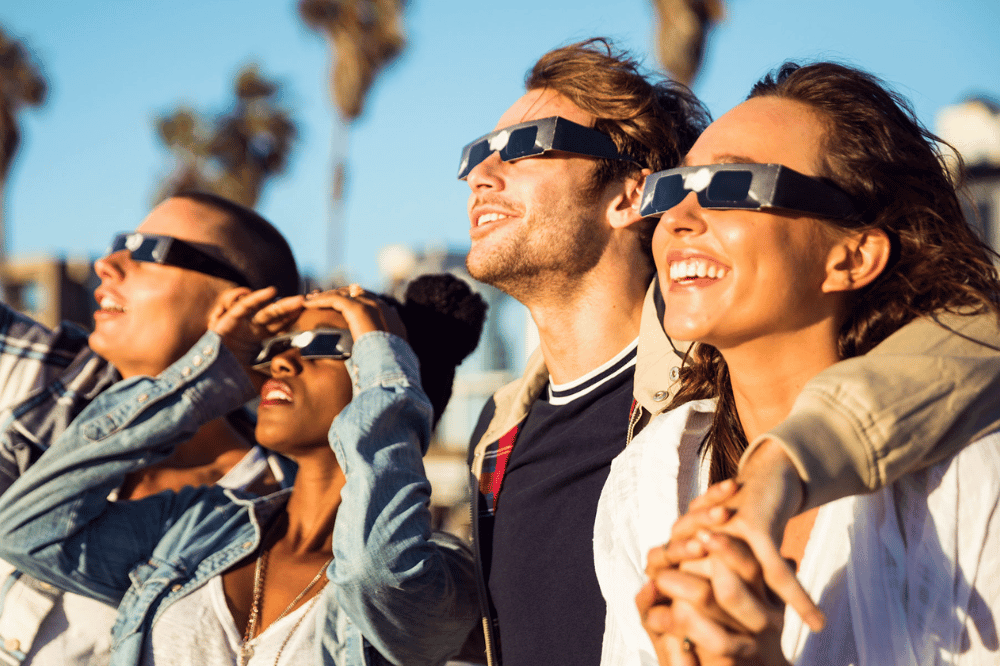
On Wednesday, 12 August 2026, a total solar eclipse will sweep across Spain for the first time in over a century. The last time a total solar eclipse was visible from the Spanish mainland was in 1912. This alone makes it a once-in-a-lifetime event.
But what makes this eclipse truly extraordinary is its timing. Rather than taking place high overhead at midday, Spain’s eclipse will arrive around sunset. The Sun will hang low on the western horizon as the Moon slowly covers it, plunging the landscape into an eerie twilight. It’s a phenomenon that astronomers are calling a “sunset eclipse” and it promises to be one of the most spectacular astronomical events Europe has seen in decades.
For travellers visiting Spain this August, this is the celestial event of the summer. And the best part? Spain is the best place in the world to witness it.
Explore our experiences with local chefs.
What Makes the 2026 Solar Eclipse So Special?
This eclipse is special because is the first of three consecutive solar eclipses that will be visible from Spain between 2026 and 2028. The next will be on 2 August 2027, and an annular eclipse will follow on 26 January 2028. After that, you won’t be able to observe another total solar eclipse from Spain until 2053. So, if you’re in Spain this August, don’t miss it.
The maximum of the eclipse will occur at 19:46 (mainland Spain time) near Iceland, with a maximum duration of totality of 2 minutes and 18 seconds. In Spain, the duration will range from just a few seconds to nearly two minutes, depending on your location.
Where to See the Total Solar Eclipse in Spain
The path of totality will cover approximately 40% of Spain, crossing the northern half of the peninsula from west to east. The eclipse will be total across much of the northern half of mainland Spain and in the Balearic Islands, while it will be seen as partial in the southern half.
Here are some of the best places in Spain to experience totality on 12 August 2026.
A Coruña, Galicia: Where Totality Begins
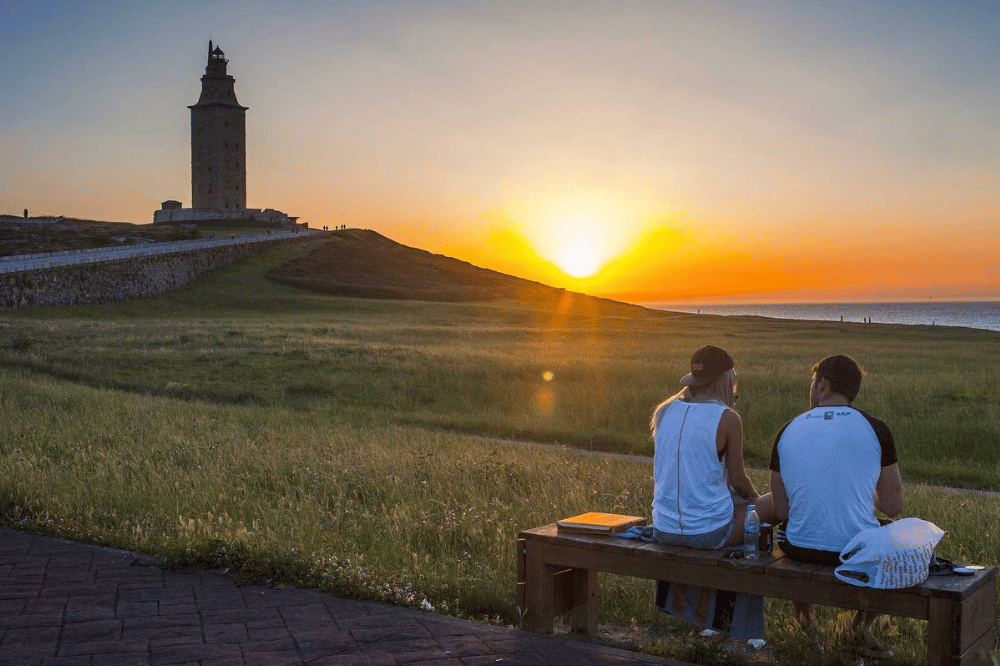
The first place in Spain where the eclipse will be visible is Galicia. In A Coruña, the eclipse will begin at 19:31, reach its maximum at 20:28, and end at 21:22, just a few minutes before sunset. The duration of totality will be 76 seconds, with the Sun at an altitude of 12 degrees.
The Tower of Hercules, a Roman-era lighthouse on the northwest coast, offers one of the most iconic viewpoints in Galicia. From here, you’ll have an unobstructed view over the Atlantic Ocean, making it a prime spot to watch the Moon slowly devour the Sun as it sinks towards the sea.
Traditional asturian menu with mountain views in a rural setting near the Picos de Europa.
2. Picos de Europa, Cantabrian Mountains: Nature at Its Finest
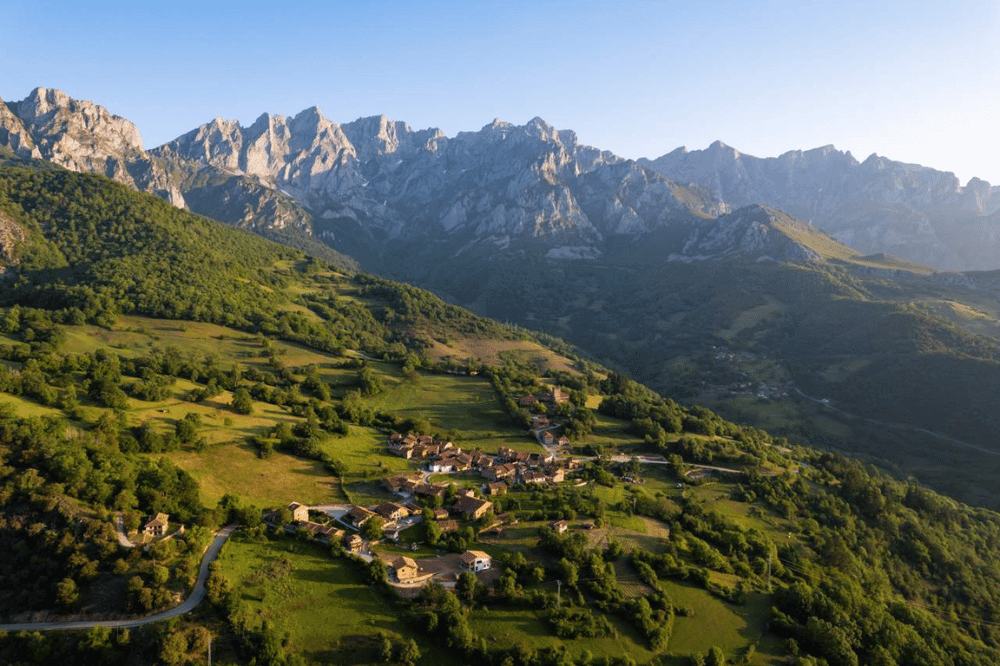
For those who want to combine the eclipse with spectacular mountain scenery, the Picos de Europa is an unforgettable choice. Totality here will last 1 minute and 43 seconds, with the Sun 9 degrees above the western horizon.
Observing the eclipse from the rugged peaks of this national park, framed by limestone cliffs and deep valleys, is an experience that will stay with you forever. Just make sure you have a clear line of sight to the west and arrive early to secure your spot.
Burgos and Palencia, Castilla y León: Clear Skies and Flat Horizons
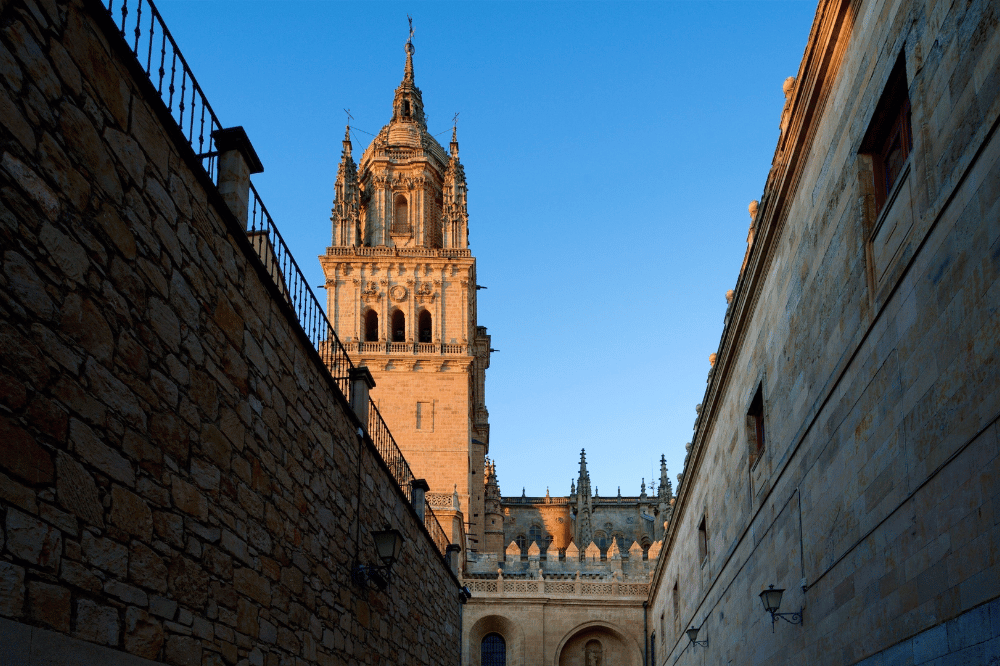
The region around Burgos and Palencia is relatively flat, making it one of the best places in Spain for unobstructed eclipse viewing. In Burgos, the eclipse will begin at 19:33, reach its maximum at 20:29, and sunset will occur at 21:20. The duration of totality will be 104 seconds, with the Sun at an altitude of 8 degrees.
Palencia, meanwhile, offers a 1-minute-29-second totality with an excellent 19% chance of clear skies. The Parque Urbano de las Contiendas on the west side of the city is a recommended viewing spot.
Castilla y León has been actively positioning itself as a prime eclipse destination, with predictions that around 500,000 visitors will flock to the region for the event. Book your accommodation early.
Traditional Avila T-bone steak experience in a historic residence with outdoor dining.
Valladolid, Castilla y León: A Top Spot for Eclipse Chasers
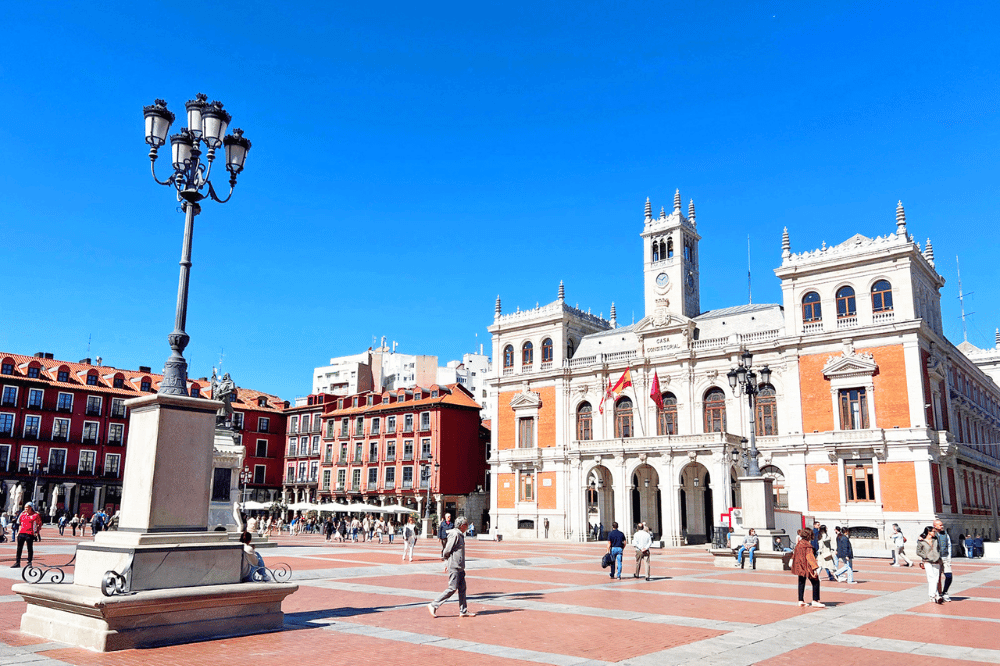
Surrounded by flat land and with a high chance of clear skies, Valladolid is one of the top spots for the eclipse. Totality will occur at 20:29, lasting 1 minute and 29 seconds, with the Sun 8.7 degrees above the horizon.
For the best view, head to the east bank of the Pisuerga River, specifically the Playa de las Moreras river beach, or the Parque Urbano de las Contiendas on the west side of the city.
Zaragoza, Aragón: Totality in the Heart of the Ebro Valley
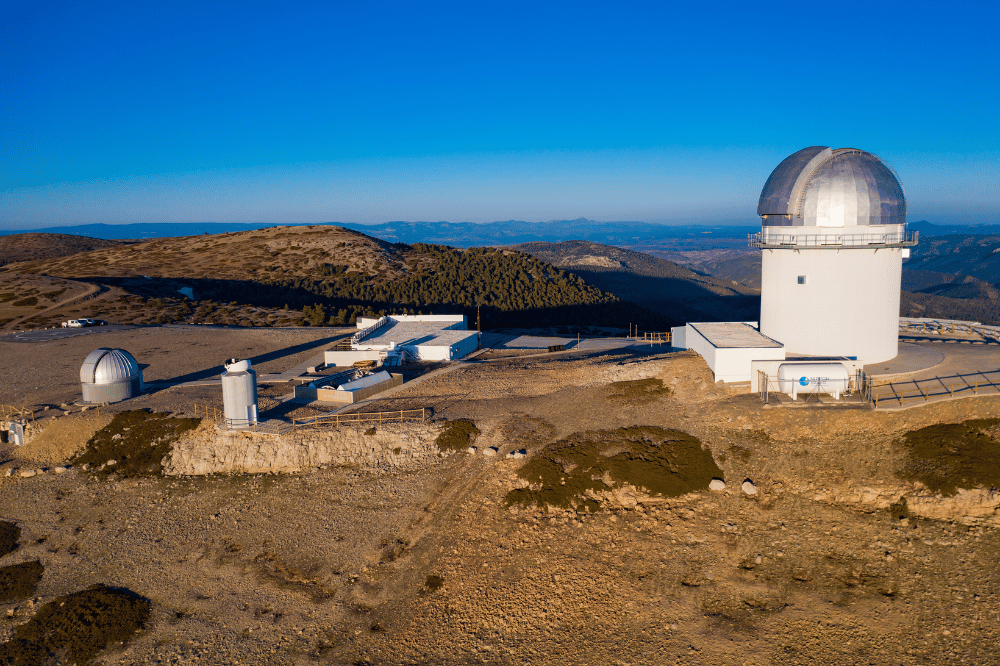
Zaragoza lies directly within the path of totality and offers excellent viewing conditions. The city’s location in the Ebro Valley provides relatively flat terrain and good western horizons.
Aragón is also home to the Observatorio Astrofísico de Javalambre in Teruel, where the European Space Agency is likely to broadcast the eclipse from. This dark-sky location, perched in the Sierra de Javalambre, offers 1 minute and 27 seconds of totality and it’s where scientists and astronomy enthusiasts will gather to witness the event at its best.
Authentic spanish dining in a charming Artajona stone house
Valencia and the Mediterranean Coast: Totality at Sunset
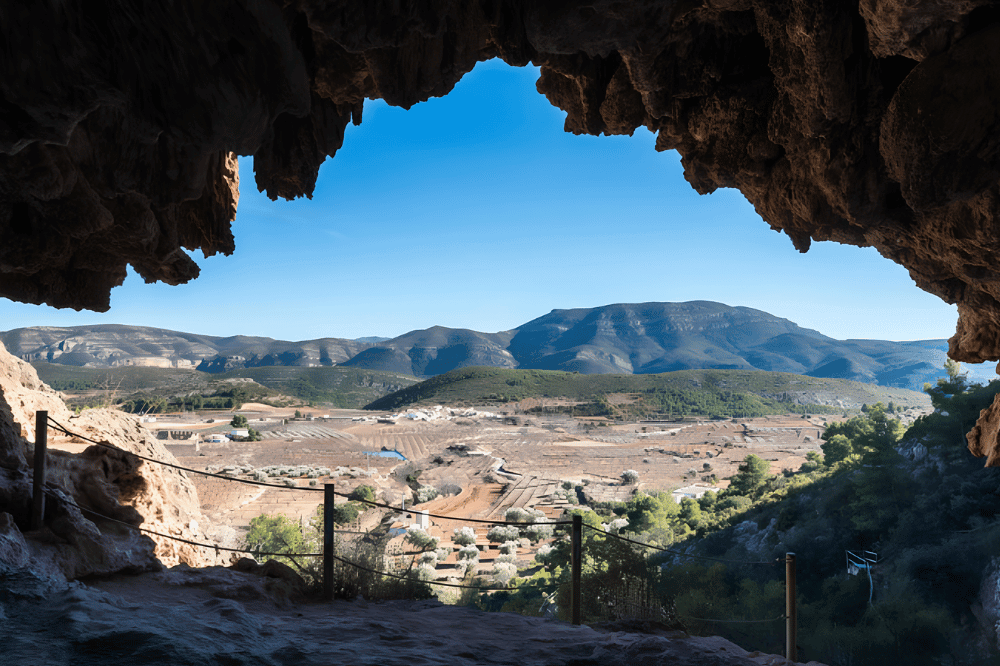
Valencia is one of the key Spanish cities that will experience complete totality. The eclipse will occur with the Sun already very low on the horizon, creating a dramatic sunset eclipse effect.
For a truly unique experience, consider watching the eclipse from a winery in the Utiel-Requena region, where you can pair the celestial spectacle with local wine and cuisine. Alternatively, head to the coast for an unobstructed view over the Mediterranean.
Palma de Mallorca, Balearic Islands: The Final Act
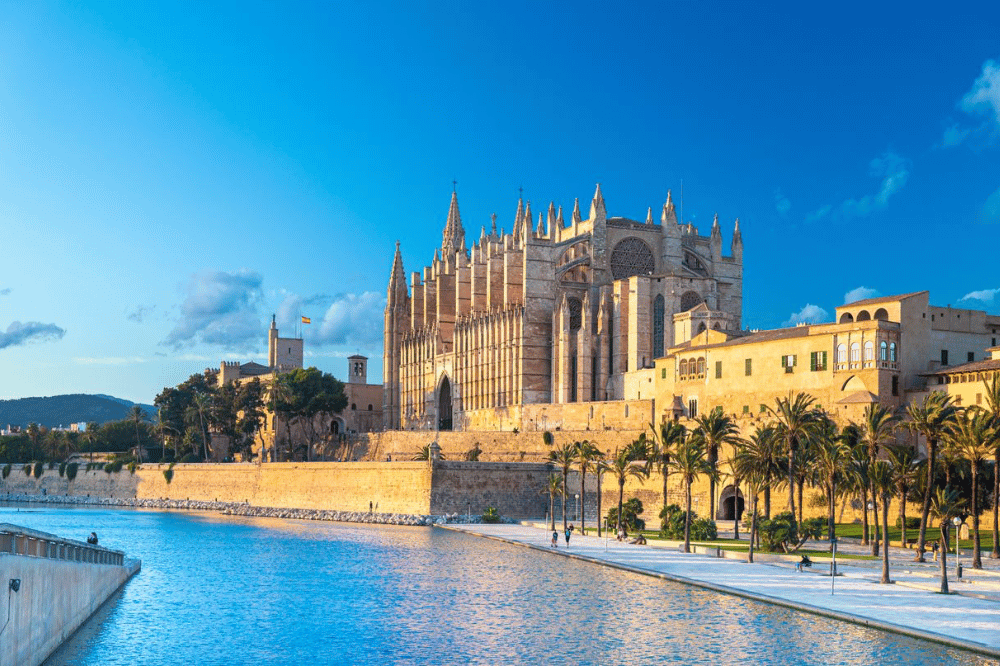
The last place where the eclipse will be visible in Spain is the Balearic Islands. In Palma de Mallorca, the eclipse will begin at 19:38 and reach its maximum at 20:32, just a few minutes before sunset. The Sun will be at an altitude of only 2 degrees, so a completely clear western horizon over the sea is absolutely essential.
The central line of the path of totality passes very close to Palma, making it one of the optimal locations for observation. The Balearic Islands are expected to be among the few places in the world where the event will be fully visible.
How to Make the Most of Your Eclipse Experience
August is the second-sunniest month in Spain, so the chances of clear skies are high. However, the eclipse will occur at very low solar elevation throughout Spain, the further east you are, the lower the Sun will be. This means that choosing the right location is more important than choosing a traditionally beautiful spot.
Here are some final tips:
- Check the path of totality using interactive maps. The Instituto Geográfico Nacional (IGN) offers an official interactive map where you can check visibility for any municipality in Spain.
- Use eclipse planning tools such as Xavier Jubier’s Interactive Google Map, The Eclipse App, and the Eclipse Horizon Checker.
- Arrive at your chosen location the night before to check for trees, buildings, or other obstructions at the time of the eclipse.
- Book accommodation well in advance, hotels in towns within the path of totality have been sold out for months.
Beyond the Eclipse: A Taste of Authentic Spain

An eclipse is a spectacle for the eyes, but a journey to Spain is a feast for all the senses. After the Moon has moved on and the stars of the Perseid meteor shower begin to fall, there’s no better way to complete your experience than by savouring the flavours of the region you’re visiting.
The most authentic way to experience Spanish cuisine isn’t in a tourist restaurant, it’s in a local home, around a family table, where recipes have been passed down through generations.
At Sazón, we connect travellers with local cooks who open their homes to share the true taste of Spain. Whether you’re watching the eclipse from Galicia, Castilla y León, Aragón, or the Balearic Islands, a home-cooked meal with a local family is the perfect way to celebrate this once-in-a-lifetime event.